By James

Since my sister was caught up in the IT chaos that affected British Airways back in May, we set off for the lowland town of Ubud without her. Ubud used to be a peaceful, calm little town where locals lived side by side with small yoga studios, and was a central location in the book (and film), ‘Eat. Pray. Love.’ Unfortunately, this love letter to the town has partly been responsible for the change that has taken place over the last few years. We got our first indication of this when it took our taxi 45 minutes to drive 3 miles- the infrastructure just isn’t set up for the massive increase in traffic it has experienced. In the Town Centre boutique hotels jostled for space with shops catering to the yogi, Yummy Mummy type (think £50 yoga leggings and £100+ silver hippy jewellery) and expensive foreign restaurants.
We met Rosanna at our hotel the first evening we arrived, as she had fortunately managed to get on a flight less than 24 hours after her original flight time. We went out to an East Javanese style restaurant with £1-1.50 mains dishes; they were so delicious and such good value that we ended up returning there 5 times!
On the first day of our week we had together we travelled North West to a small Sacred Monkey Sanctuary. Virtually abandoned, we wandered around undisturbed by any other visitors, yet periodically assaulted by monkeys.
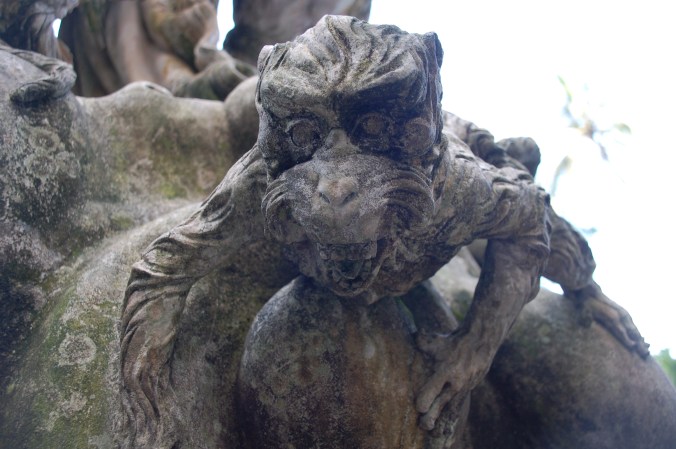
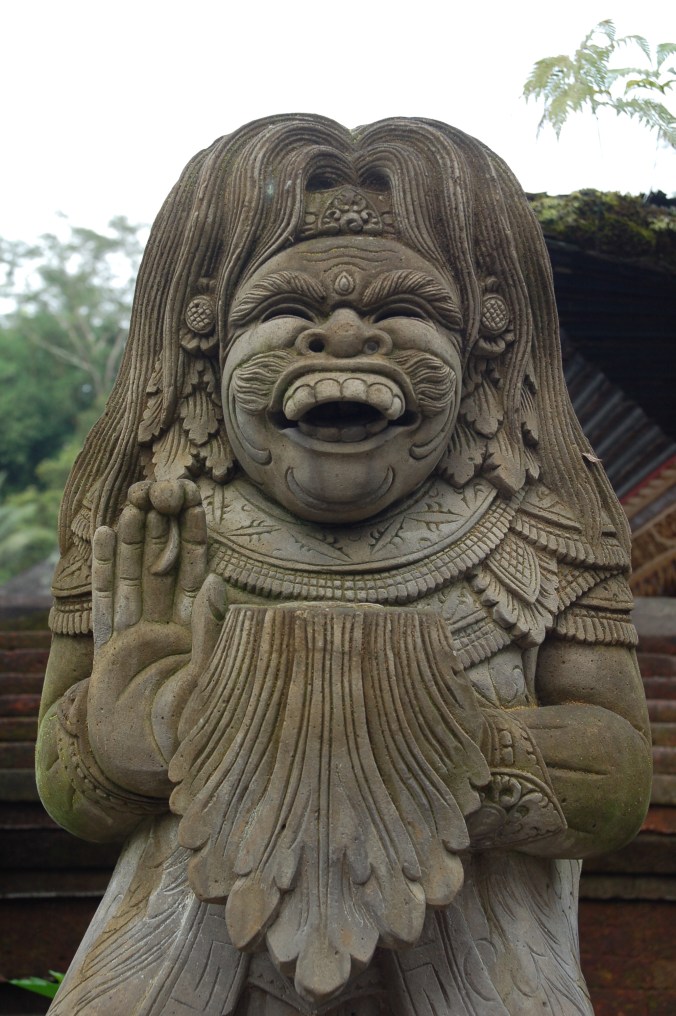
The viciousness of this statue is only a slight exaggeration of the real thing…

They shall have their revenge, Rosanna!
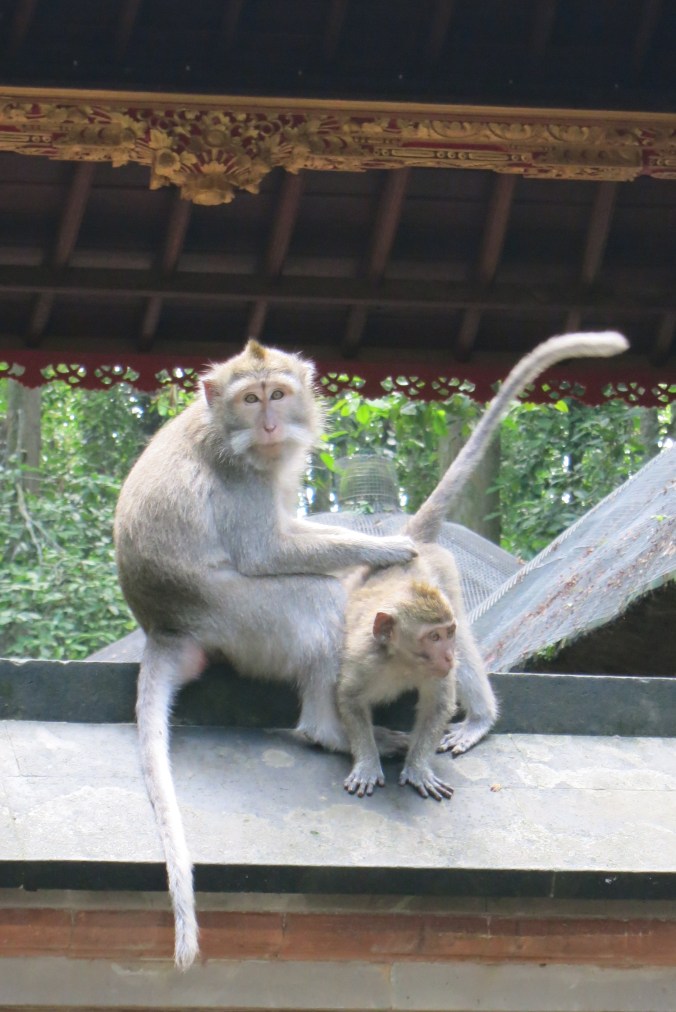
Don’t be fooled.
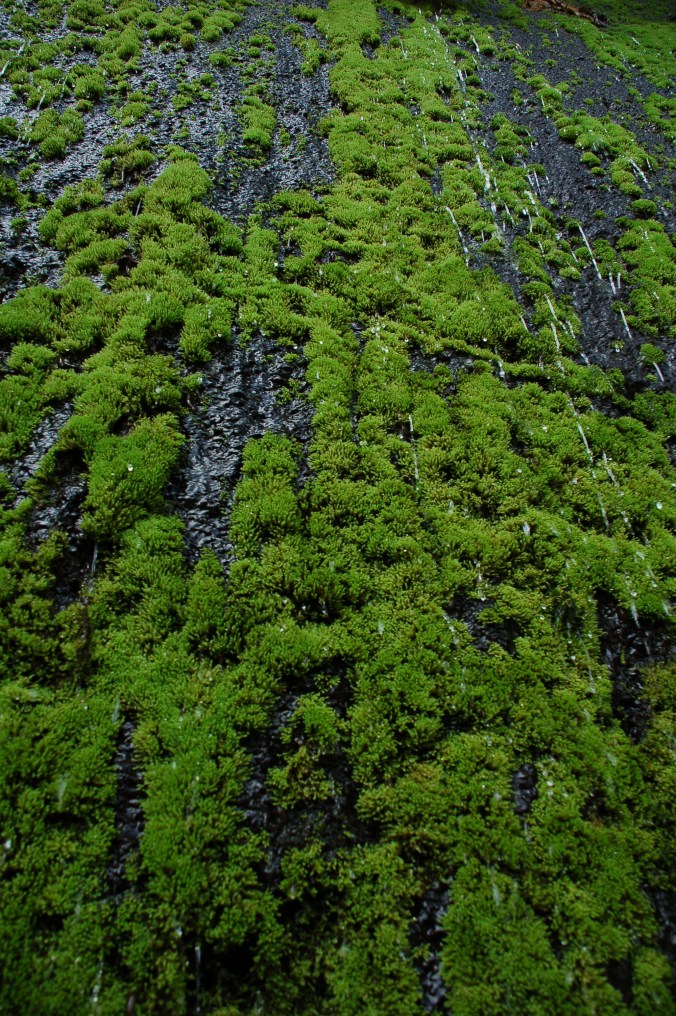
After Chloe and Rosanna had both been jumped on by hissing primates (I had the forethought to pick up a stick, so was left alone), we left the monkeys and clambered down to a small sacred spring by a river.
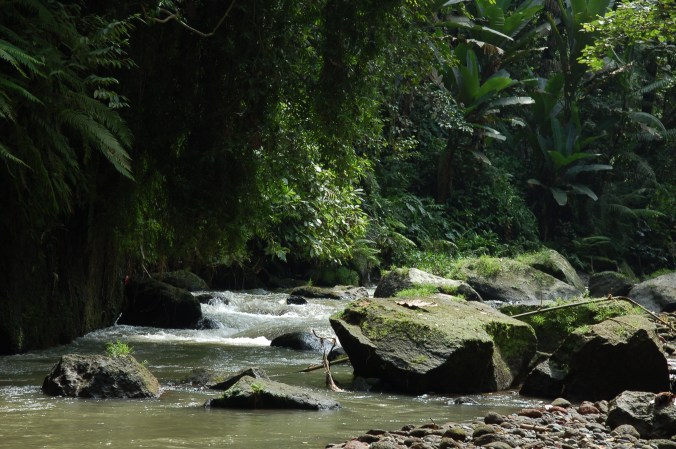
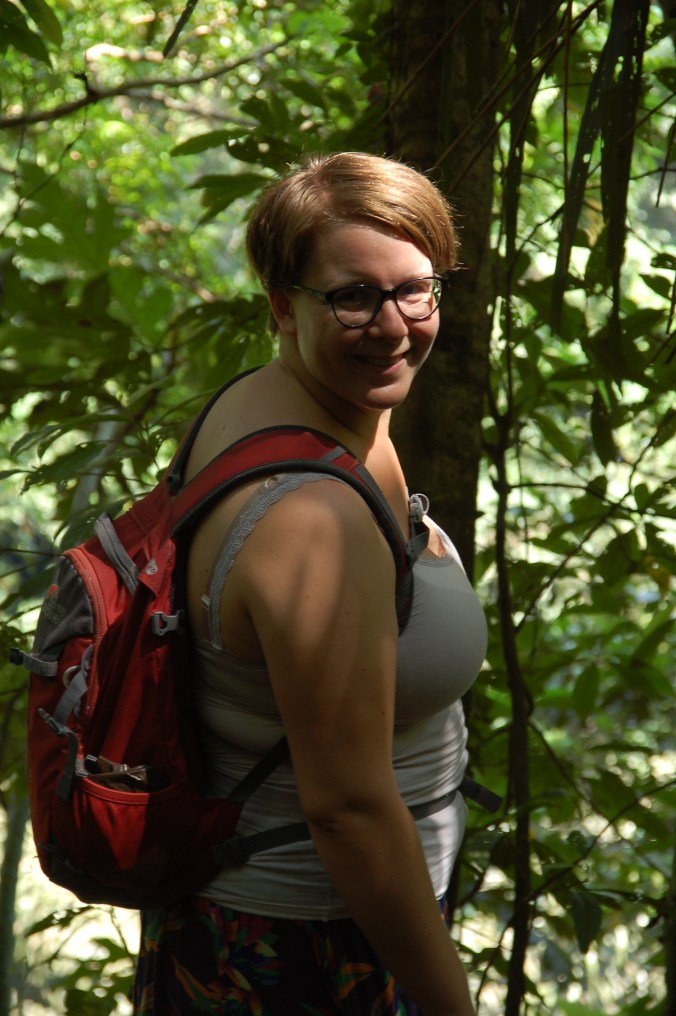
My beautiful wife
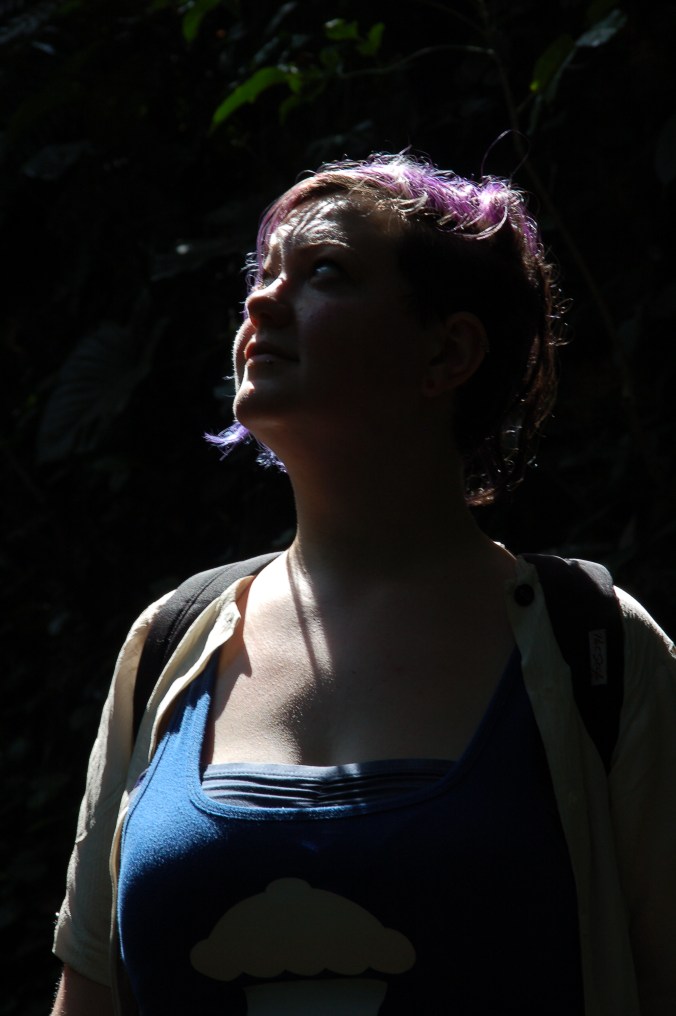
My lovely sister
That evening we hopped on our scooters to go to a traditional Balinese puppet show. We had just enough time to get a relaxed dinner before the show. This was not a good time for my scooter to conk out due to lack of petrol! I left the ladies where they were and frantically rode around the streets looking for the little shops that sold petrol by the litre out of glass bottles. During the day they were everywhere- at night this was not the case. I gave up and got back just in time to wolf down some fried rice and do some quick shuttle runs with the remaining bike.
The puppet show itself was out the back of a small mask and puppet gallery at the edge of the touristy part of town. We were led in the dark down a path to a small auditorium with a backlit screen. Whilst we waited for the show to start (things never start in Indonesia due to a phenomenon called ‘Rubber Time’) we read a synopsis of the story we were about to watch. It told of a marauding demon king who invaded one of the Balinese kingdoms of antiquity and started eating people! Word spreads around the island of this terrible scourge until it comes to the ears of a young prince. Even though his mother begs him not to, he sets off on a bloody quest to kill his way up the ranks, all the way to the demon king; whereupon they have a big battle and the prince wins. This was all to be performed by a single Puppet Master, assisted by his two, well, assistants, on a screen lit by a flickering torch. What we did not realise is that, despite the abundance of tourists, the performance was to be in Balinese and performed at a hell of a pace.
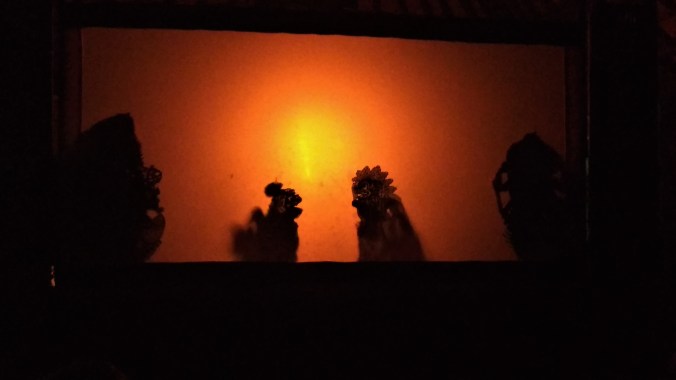
Near incoherent madness…
Even with a broadind and this synopsis, the story was next to impossible to follow. This, combined with the discordant, syncopated Gamelan music, meant it was like watching a Jim Henson fever dream.
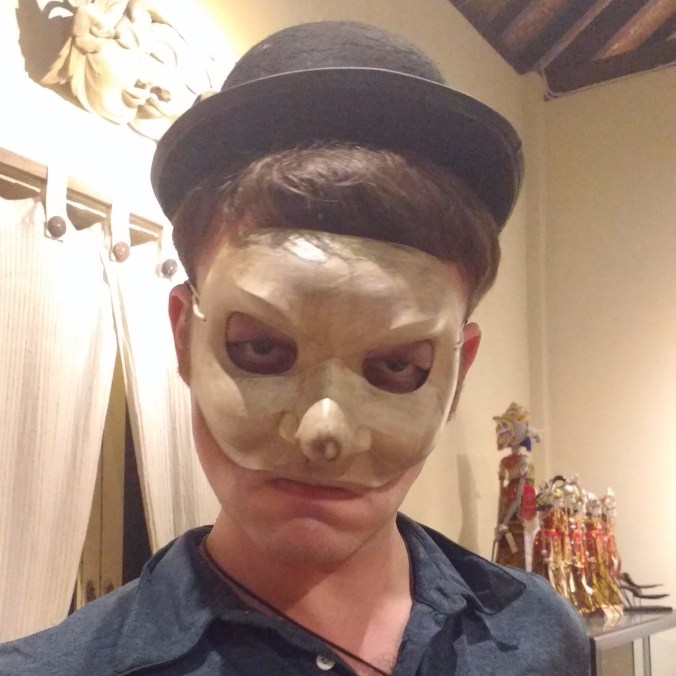
Viddy well my droogies, viddy well.
We left via the gallery and went home confused, but very much entertained. Rosanna and I took the first shuttle run back and managed to find a petrol pump that was about to close. Since the other bike was at least a 20-minute walk away and the guy didn’t have any bottles, we (rather foolishly) accepted his suggestion of using a sandwich bag to take our litre of petrol away with us. We sped back to the bike with the petrol leaking out of the bag and managed to get about 1/2 of it in the bike and 1/2 of it in my hands and road. It was enough, however, to get it home.
The following day, our last in Ubud, we visited Pura Tirta Empul, the Holy Water Temple. I was the only one who wanted to go in to bathe in the sacred water, so Chloe and Rosanna watched from the side.
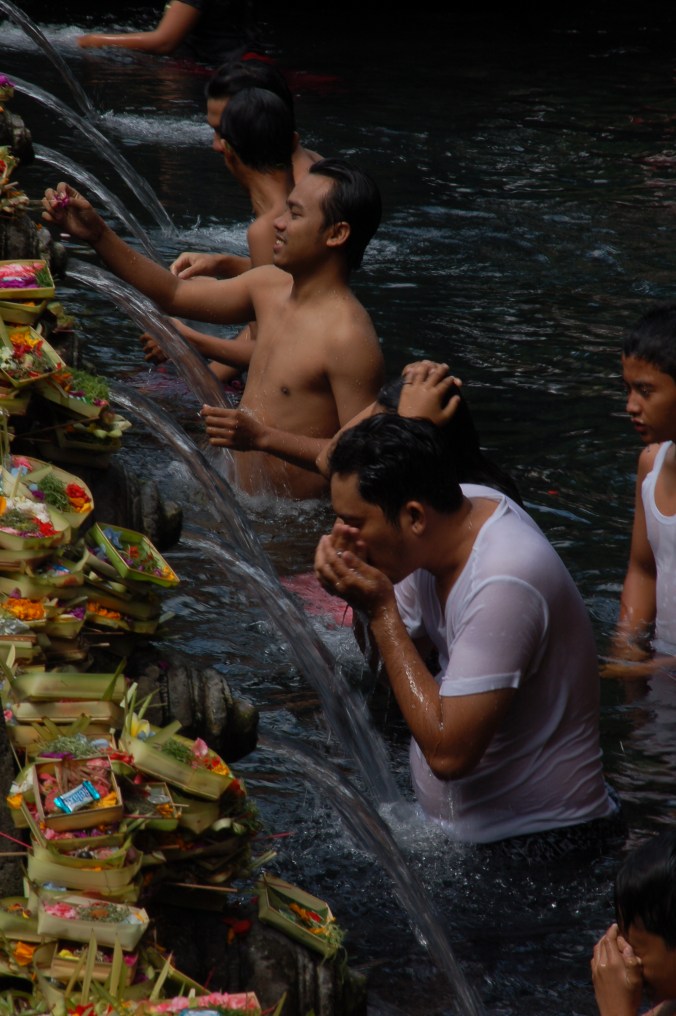
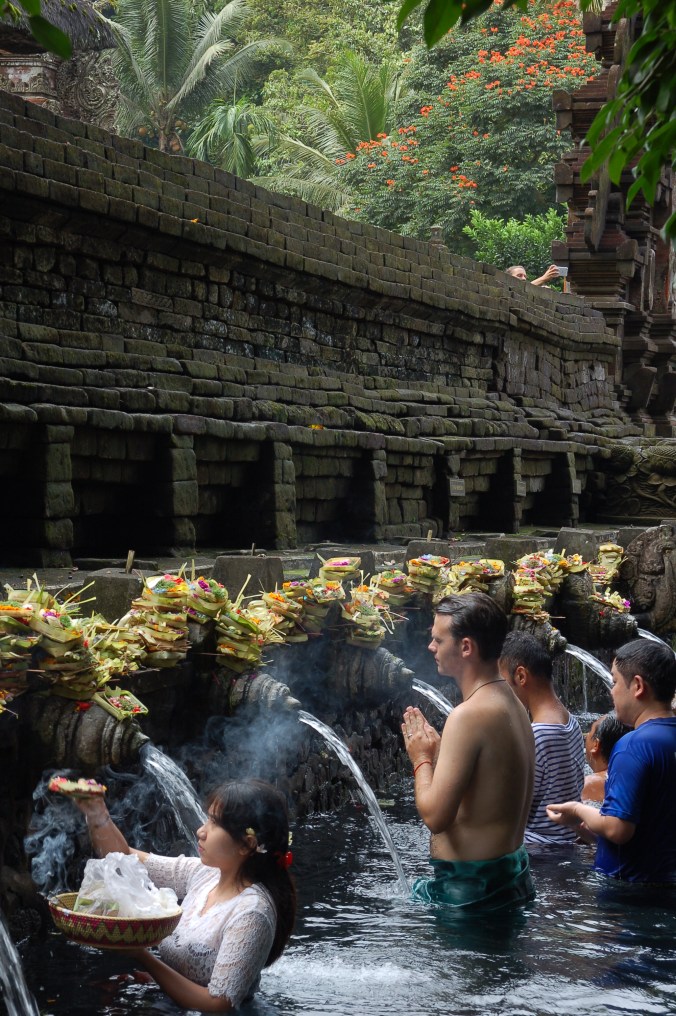
Bali’s holiest spring pours forth to the faithful from 12 stone spouts. After an offering to the Gods and a quick meditation, and dressed in a rather fetching green sarong, I got into the stone pool along with the other visitors and was startled to find fish swimming around my thighs!
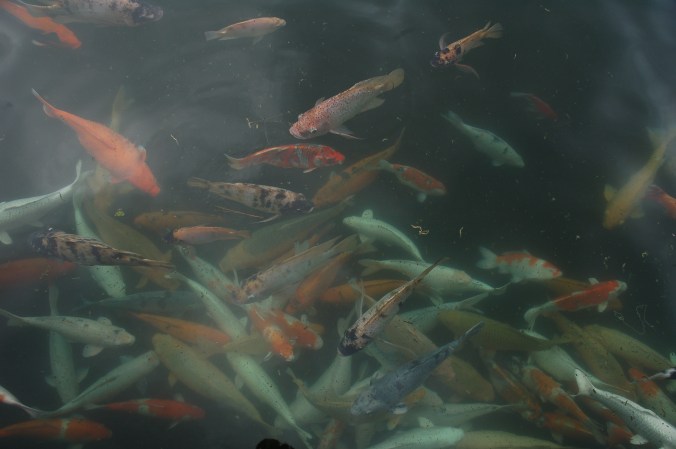
The first pool, the Purification Pool, is for the washing away of sins. One splashes one’s head three times, then takes a drink of the spring water and then submerges one’s head in the flow, washing away a different sin as one moves from spout to spout.
The second pool only has two functioning spouts (the rest are for festival days only) and are to wash away broken promises and evil thoughts. Although I am not religiously inclined, Hindu or otherwise, I found the constructive introspection it provided really very restorative and I made a few promises to myself to amend my behaviour, which I have mostly managed to keep. (And no, you can’t know what they are!)
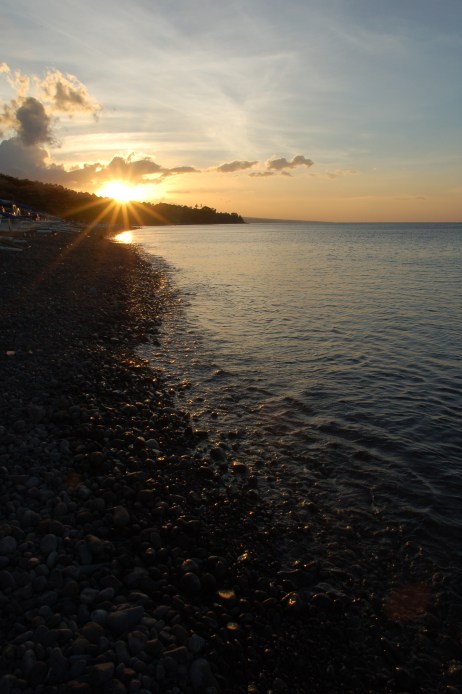
The next day we said goodbye to Ubud and headed East to the coastal fishing village of Amed, where we stayed in a rather lovely villa for Rosanna’s 24th birthday.
Unfortunately, as Rosanna got very burnt out on the roof terrace on the first day, we did not do much there. The day before her birthday we covered up and we went to visit a Japanese 2nd World War shipwreck down the coast. Little is known about the circumstances of the sinking, which only added to the eeriness.
That evening we visited a lovely restaurant called Bali Sweet, which became the only place we had dinner in Amed, both with Rosanna and two weeks later with Grace and Ryan.
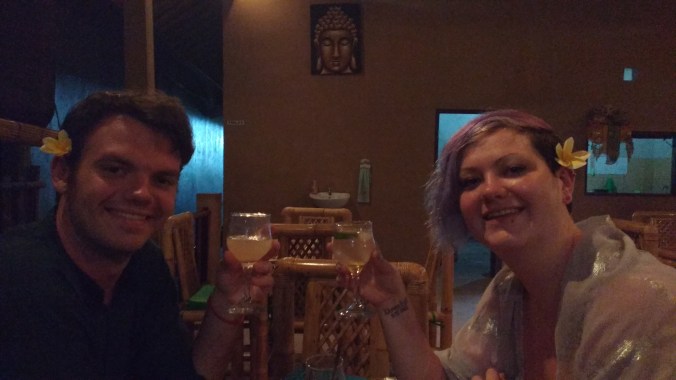
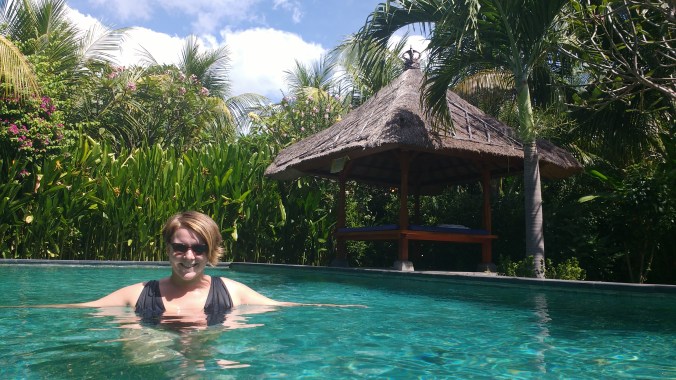
On Rosanna’s birthday we woke her up with a bright balloon shower and a cooked breakfast. Due to her burns we did little during the day other than hang out, read and swim in the pool.
At dinner back at Bali Sweet the lovely owner came in with a chocolate pancake with Happy Birthday written on it, a 2 and a 4 in candle form stuck in the centre, with the whole staff singing happy birthday.
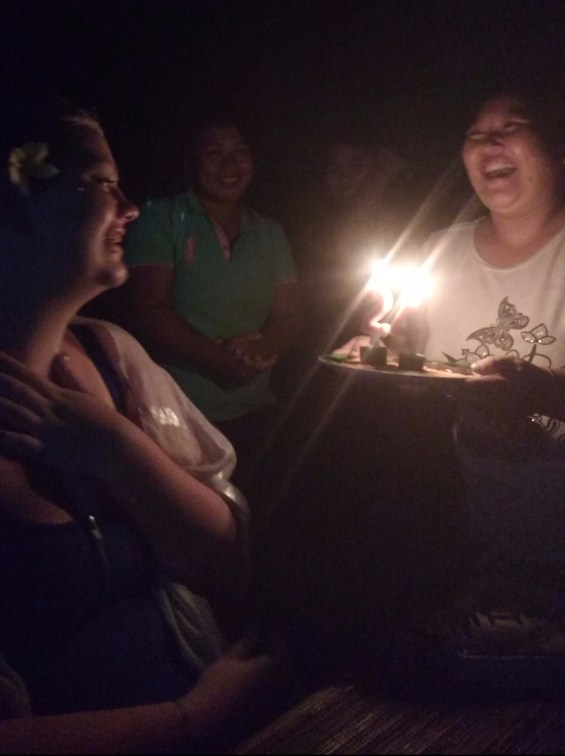
Rosanna was so touched she even let out a few happy tears. It wasn’t long before we had to leave Amed and head back South to drop Rosanna off for her 2 weeks of sun and fun in Kuta, and to pick up Grace and Ryan. Which is where we shall pick things up in the next post.
Love, The Backpack Duo x
 After a rather delayed hotel transfer we arrived at Banguwangi Homestay, a small house with a German couple staying in the room next to us and the family relegated to sleeping on the living room floor. We were pretty uncomfortable about this, but our host Desy insisted, I guess they make enough money for it to be worthwhile?
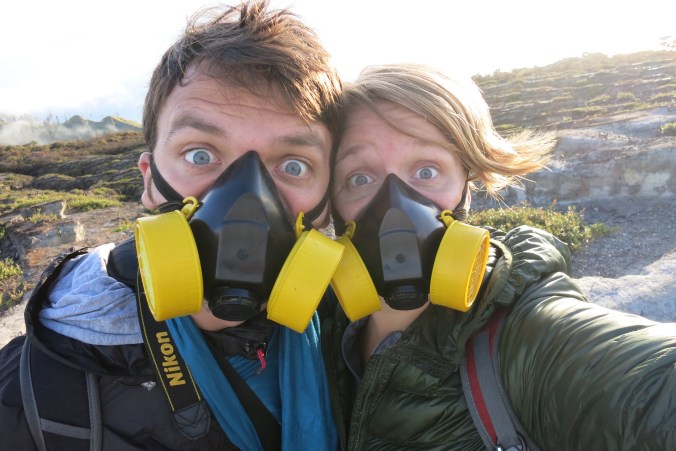
 After far too little sleep we awoke at 12:30 am, and were bundled into our jeep and driven the hour and a half to base camp for the climb up Ijen. We were given our standard issue torches and gas masks (yes really), and told to come find Desy when we returned. So at 2.30am we began our arduous climb to the summit in the pitch black!
 Now, in terms of distance, it may not be very far from the entrance to the crater, but in terms of height, it covers a huge amount of ground! Most of the climb up consisted of 30-45 degree slopes (if you google this, you’ll see how steep that actually is!) On our way up we encountered some very smiley, friendly local men with no gas masks and wearing only trainers or flip-flops. Whilst some carried baskets, others worked in a team of two to haul an empty cart up the steep slopes (just think of those huge hand trailers used at Glastonbury and other festivals, but much less shiny and new). These spindly, smiley, flip-flopped guys were the miners! In fact, as we worked our way up to the crater, they kept asking us if we’d like a taxi. We initially thought they were joking (everyone in Indonesia seems to offer you a taxi as you walk past), but it turns out, for a small fee they would push/drag you up the steep slopes in their carts. They had calves of steel! These guys make this trip up and down the steep slopes of Ijen at least once a day, shifting a minimum of 160kg of sulphur out of the crater in a single morning just to make enough money to survive. It put our aching calves into perspective.
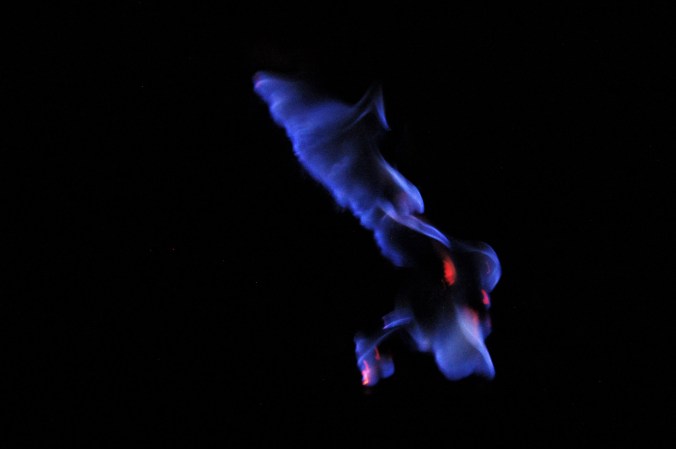
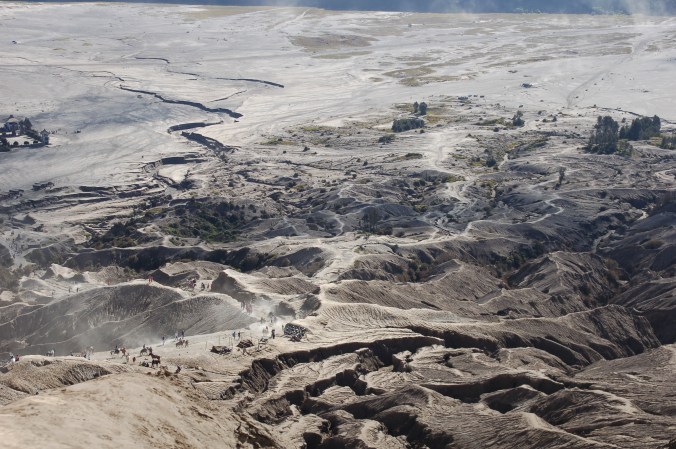
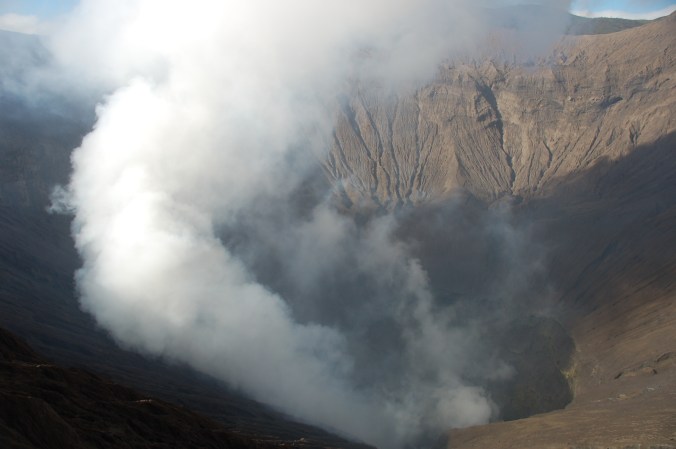
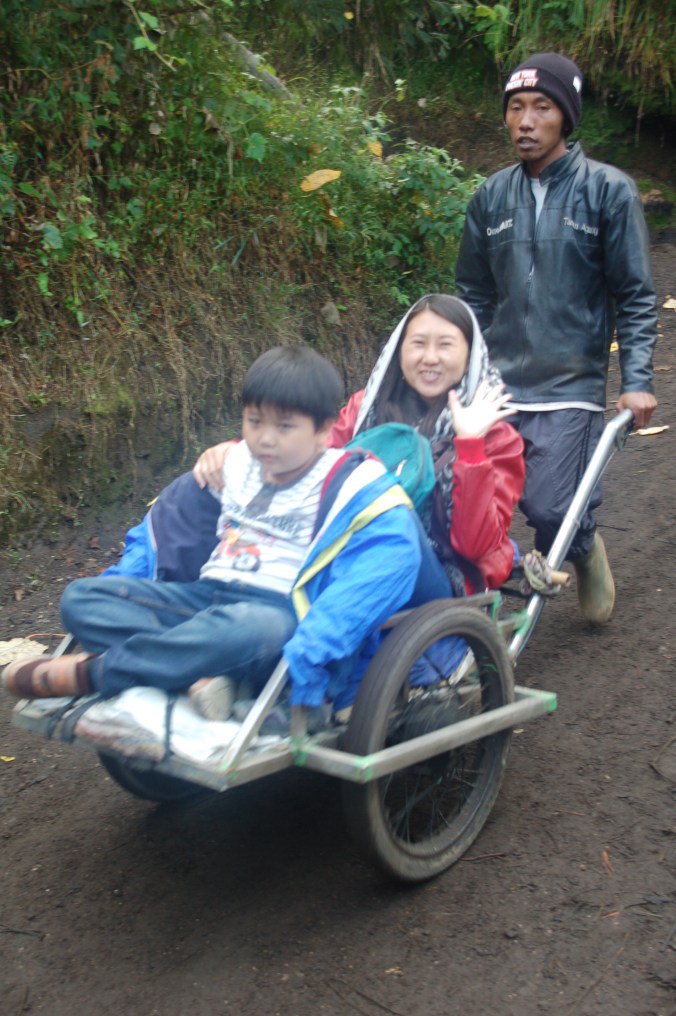 After a tortuously steep climb on (mercifully) surprisingly well-maintained mud path, we arrived at the crater, strapped up in our gas masks against the noxious gases and sat down to try to distinguish the blue fire from the plumes of sulphuric fumes that were emanating from a far-off patch of darkness. If we squinted juuuust right, we could make out the distant flicker of blue flames, but unfortunately, we weren’t allowed down into the crater for a closer look. We gave up at 4.30am and made our way up to the ridge (more climbing!), where one can see the sunrise.

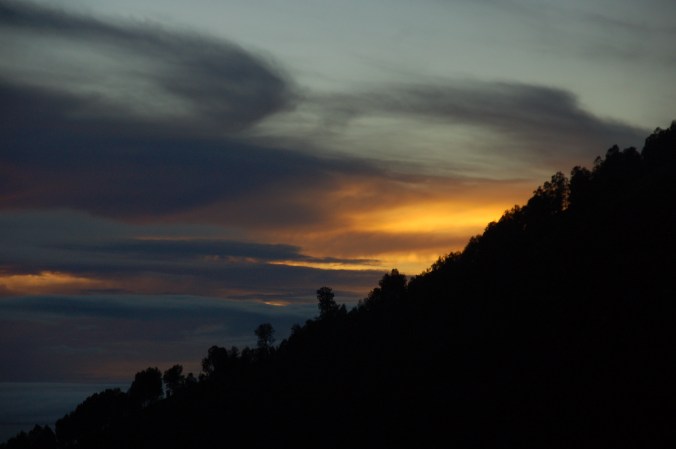
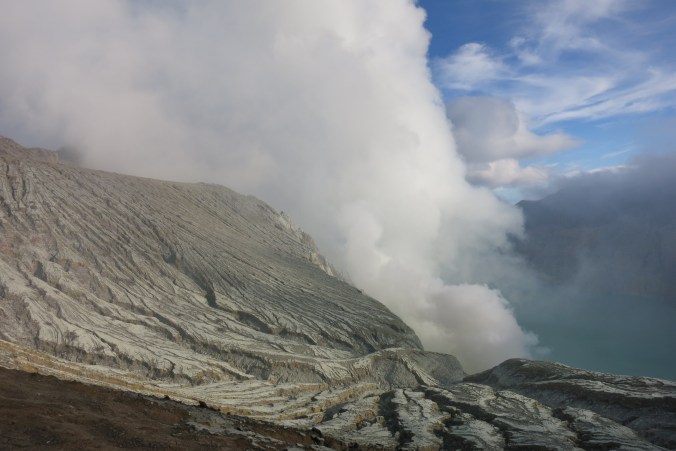
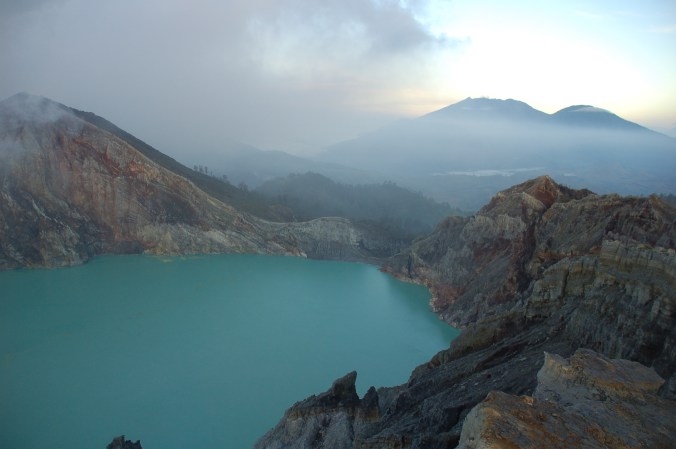
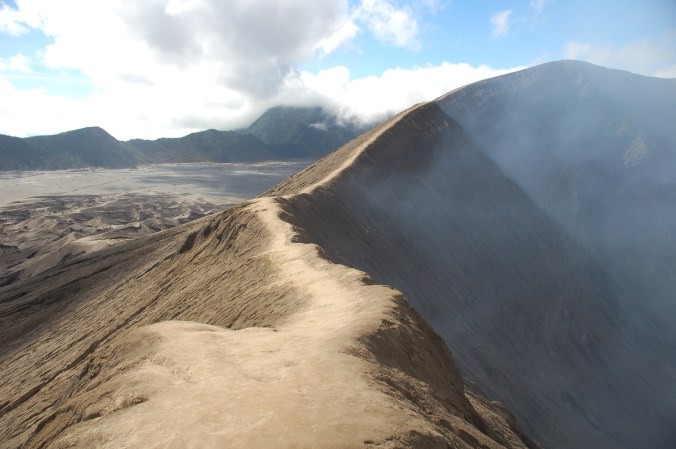
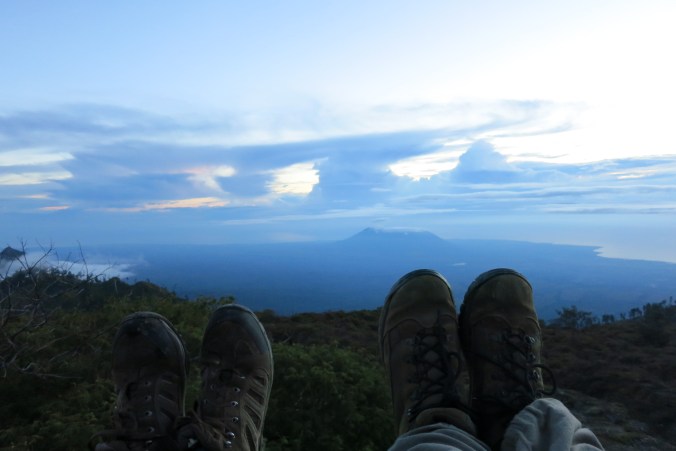 Once the sun was up we turned around and explored the other side of the ridge. And boy, were we glad we did! The sunlight had an otherworldly feel to it, with a slight mist adding a golden glow to the 6am sunlight. I can honestly say, I don’t think we’ve been anywhere that took our breath away quite as much as the sun hitting the Ijen crater and beautiful scenery behind it. The beautiful creamy turquoise lake you can see in the photos is renowned for changing colour depending on the concentration of sulphur in the water; the lighter the colour the higher the content. If it’s white, get off the mountain immediately!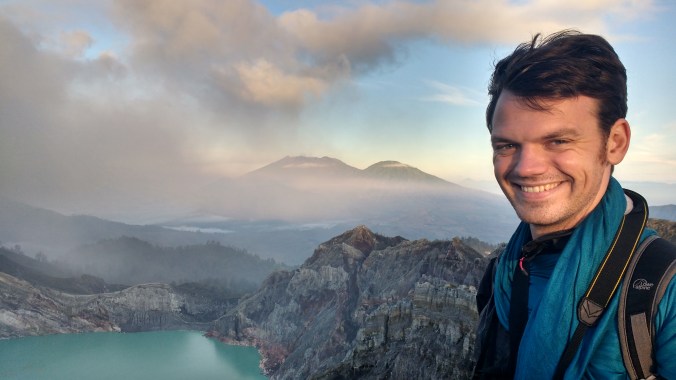

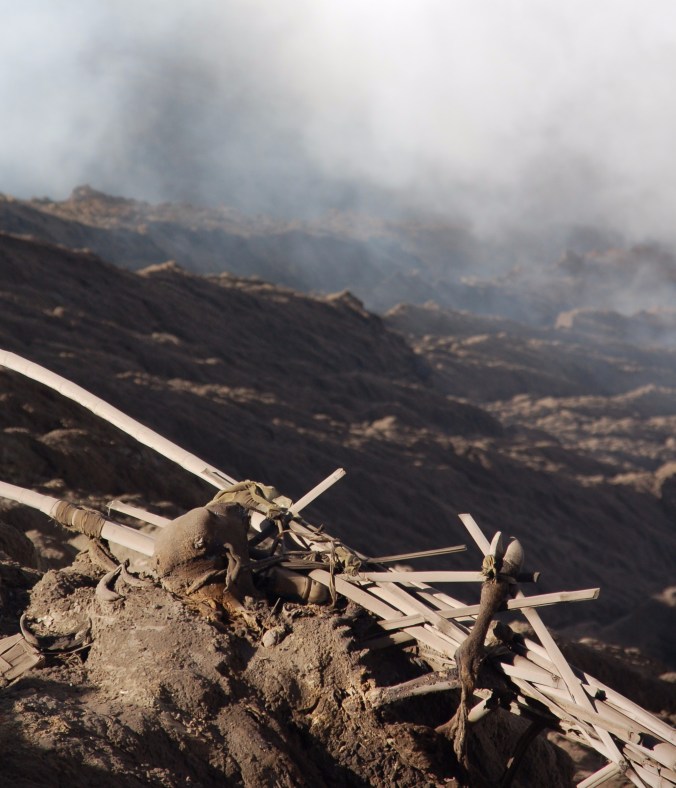
 Once the clouds rolled in and began to obscure the crater itself we headed back down to the ‘Blue Fire viewing point’ and saw the miners in action. Using basic tools, and two bamboo baskets hung on a long stick over the shoulders (as you would two milk pails), they mined huge chunks of sickly yellow sulphur out of this crater and lugged their 80-100kg loads up the steep crater rim. Think of them the next time you spark a match…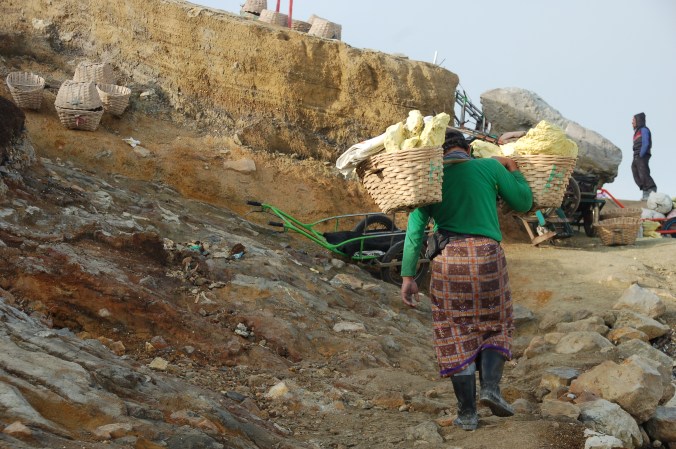
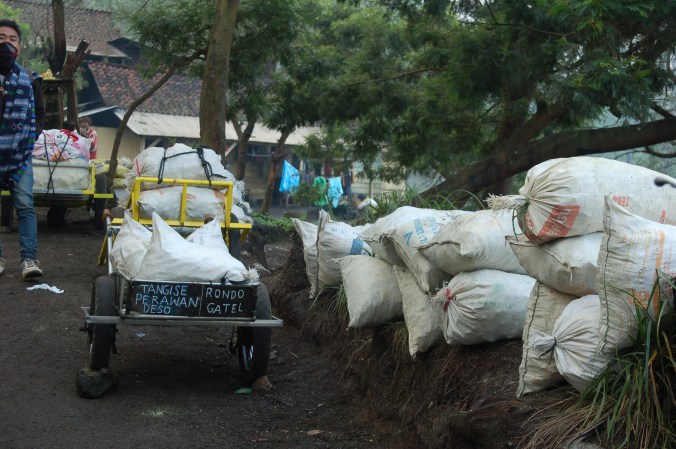 On our way down we saw those who didn’t think the sunrise was worth getting up so early for making their way up (more fool them!! As the crater was now covered in clouds). Whereas we had walked up on our own two feet, these people chose a much more decadent form of transportation.
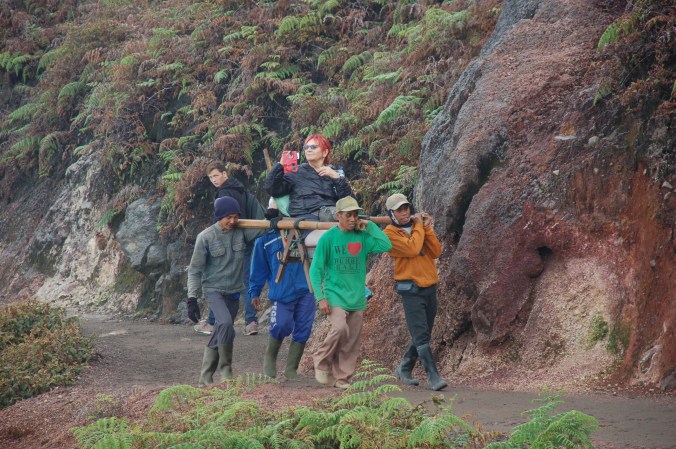 We could not fathom how they could sit there whilst four poor locals lugged them up and down the mountain, changing shoulders every 200 meters because it hurt too much. Each time we passed them- with their looks of haughty indifference on their faces, their noses in their iPhones- James couldn’t resist greeting them as either “M’lord” or “M’lady” (much to Chloe’s chagrin). I suppose it was a way of making money for the guys and it beat hacking at sulphur, but still. More white man’s guilt… it leaves such a bitter taste in one’s mouth.




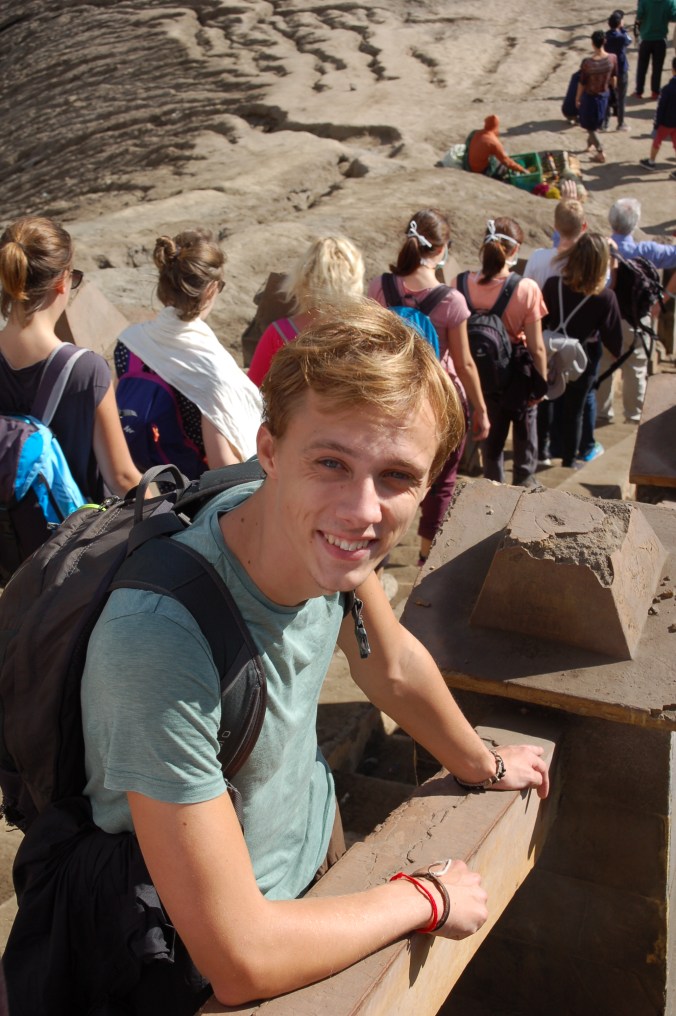

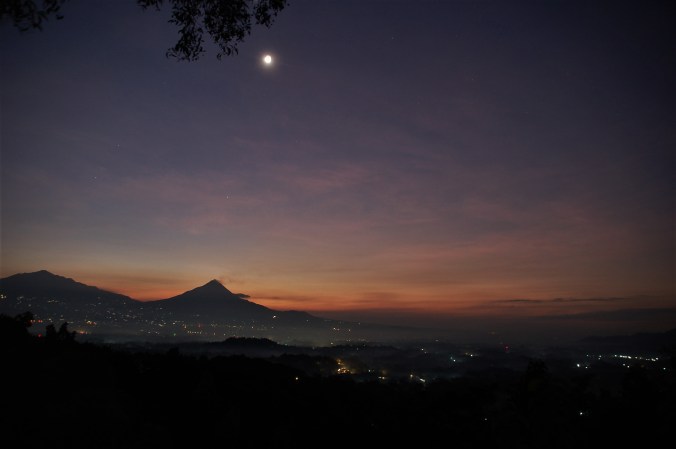
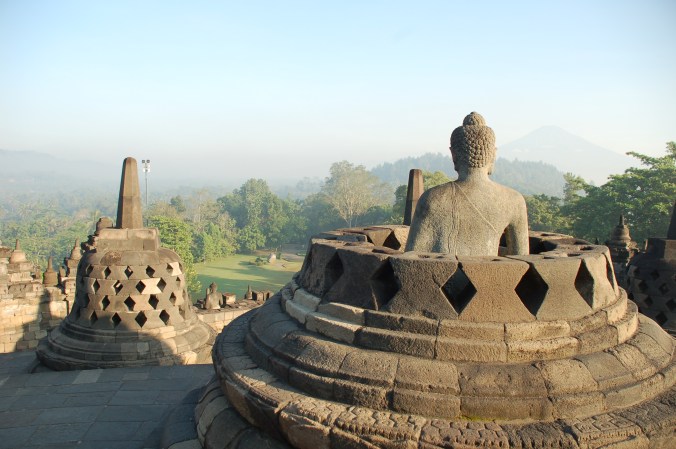
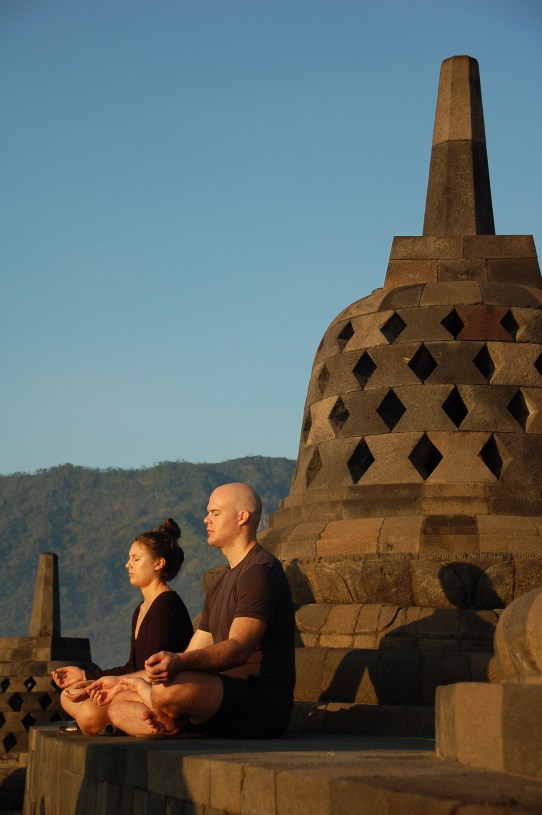
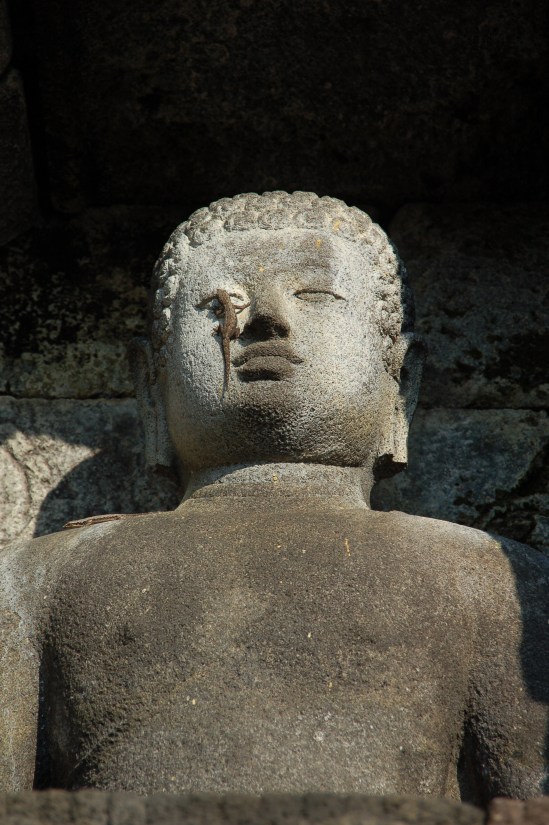
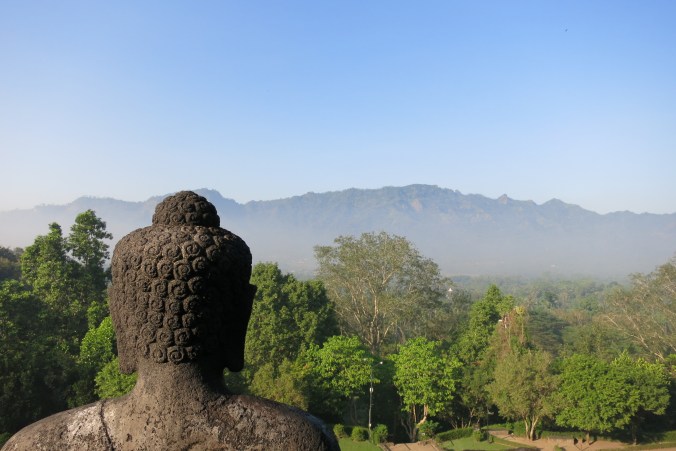 Borubudur was built in the 9th Century by the local Sailendras dynasty and was abandoned in the late 10th/early 11th Century, after a series of volcanic eruptions. It was not rediscovered until Governor General Thomas Stamford Raffles (he who founded Singapore) ordered a Dutch engineer to explore the site, towards the end of the 19th century. The temple itself blends the Indonesian indigenous cult of ancestor worship with the Buddhist concept of attaining Nirvana. The journey for pilgrims starts at the base of the four sided pyramid and rises up the three ‘layers’ to the final platform. The monument’s three divisions symbolise the three ‘realms’ of Buddhist cosmology: the world of desires, the world of forms, and the formless world. The final platform is Nirvana, where 72 Buddhas sit, protected in bell-shaped stone stupas.













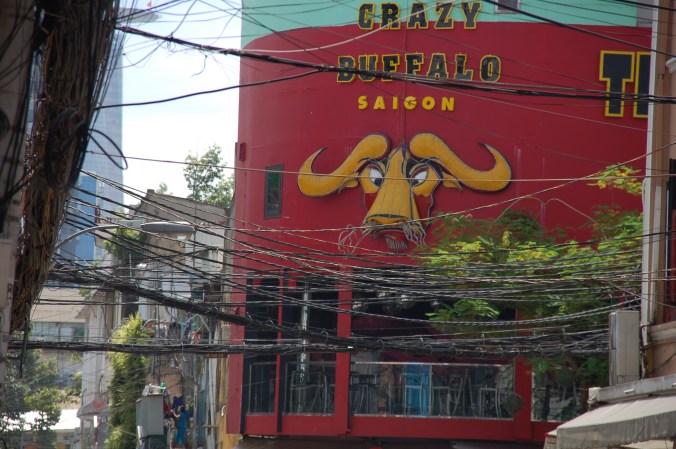
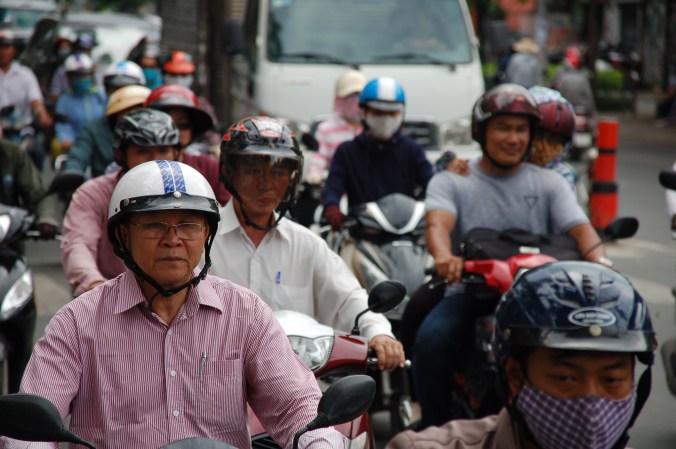 Renamed by the North after General ‘Uncle’ Ho Chi Minh, the city is still called Saigon by the locals and has a very different feel to the more subdued North. The bars are more garish, the young people more Westernised and the attitude much more informal.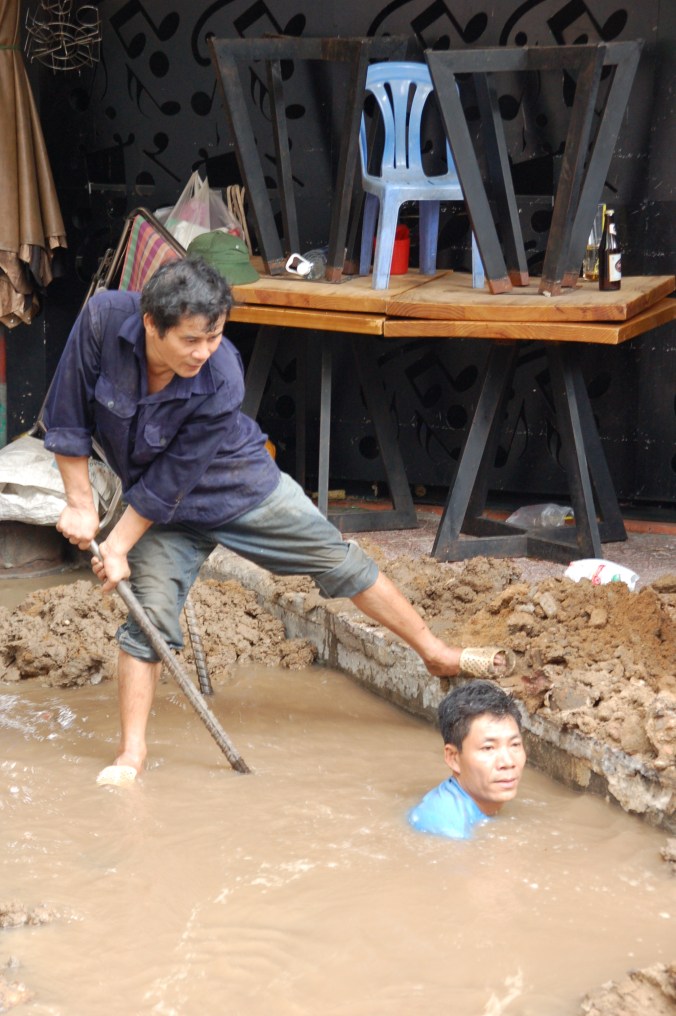
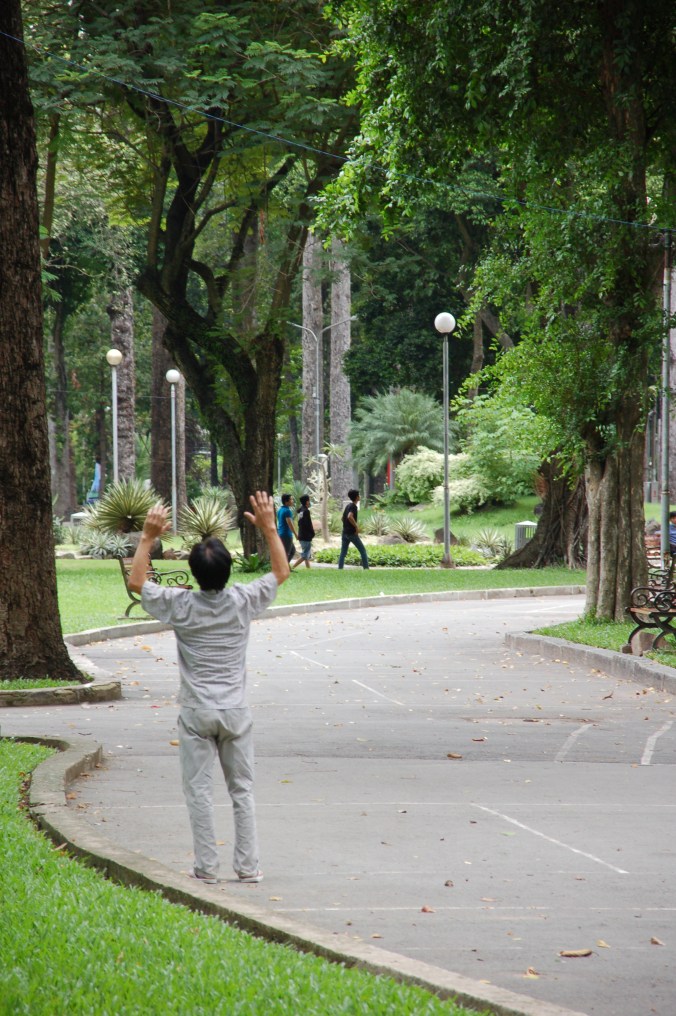
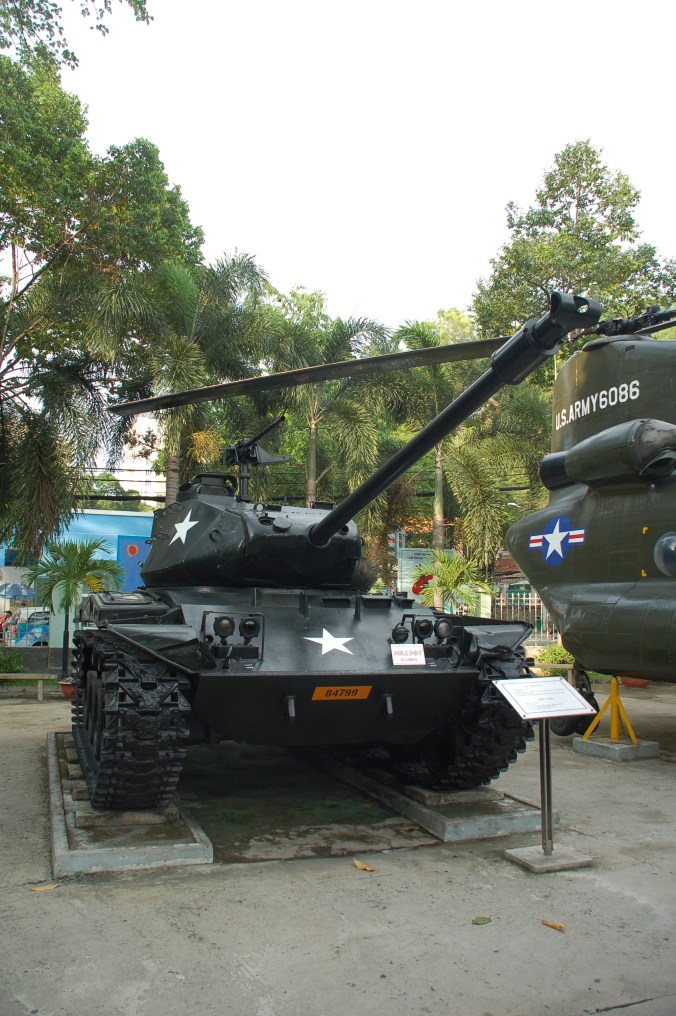
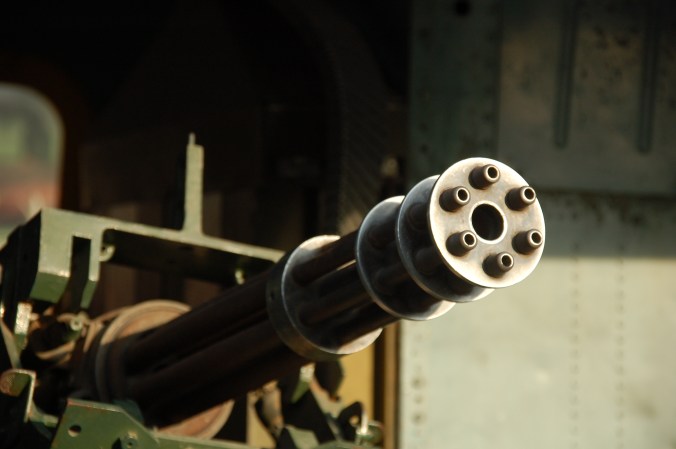
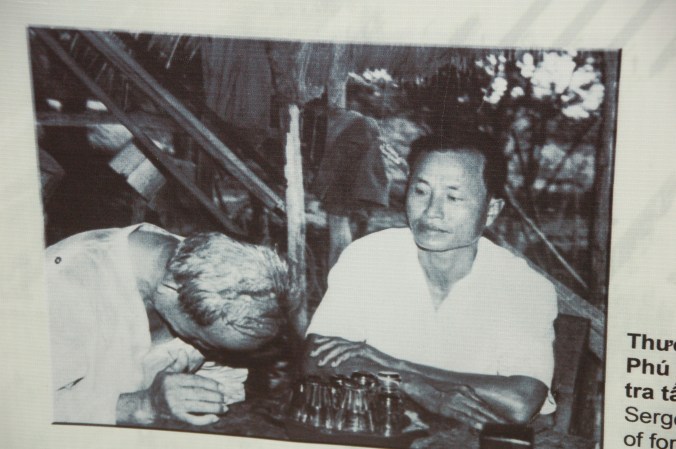
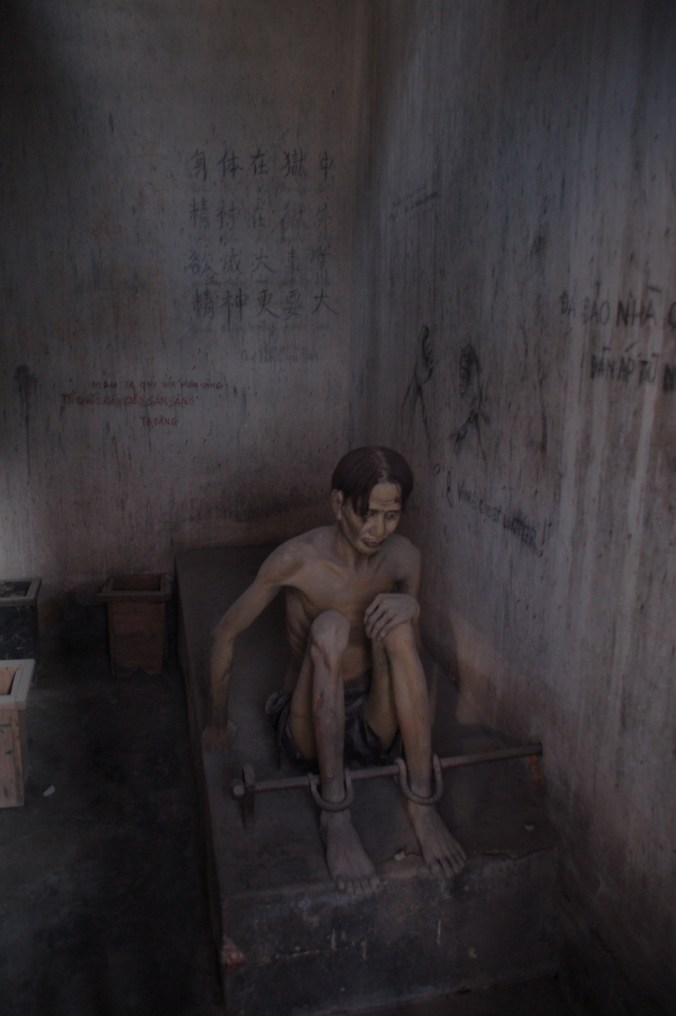
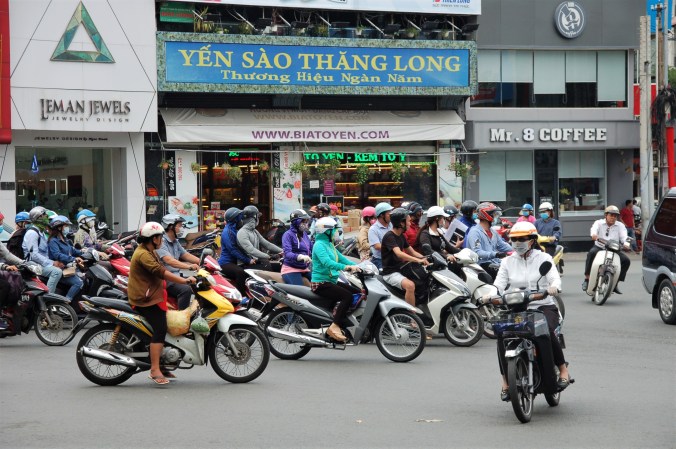


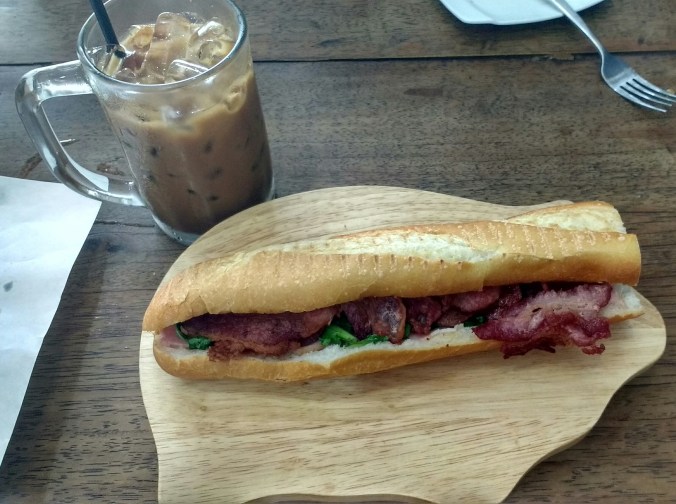
 Now, I’m not going to lie, we spent a disproportionate amount of time with the lovely Viet, her husband Sanh and their cheeky five-year-old son, Win, at their tailor shop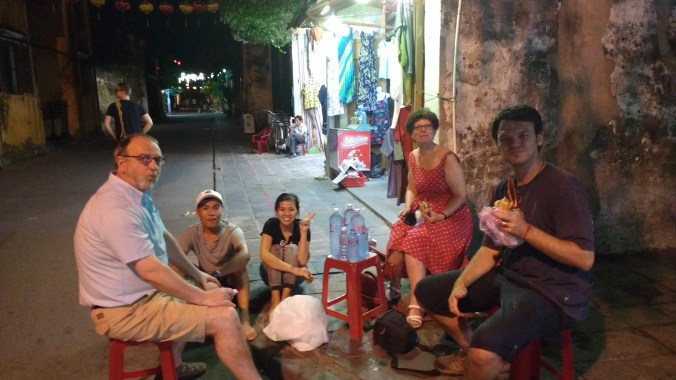




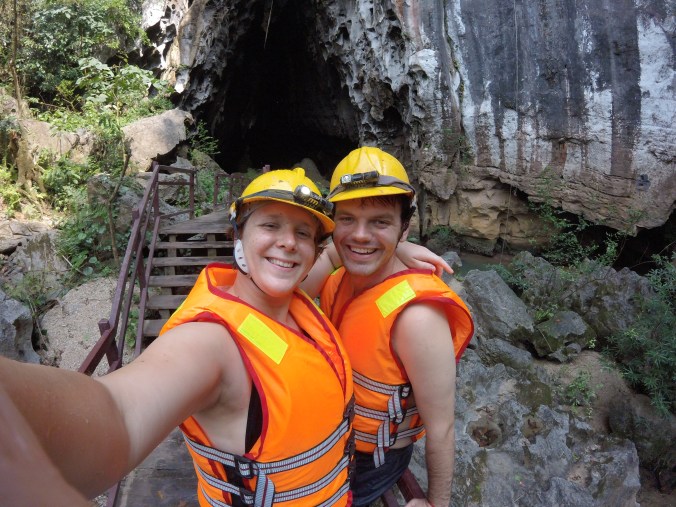
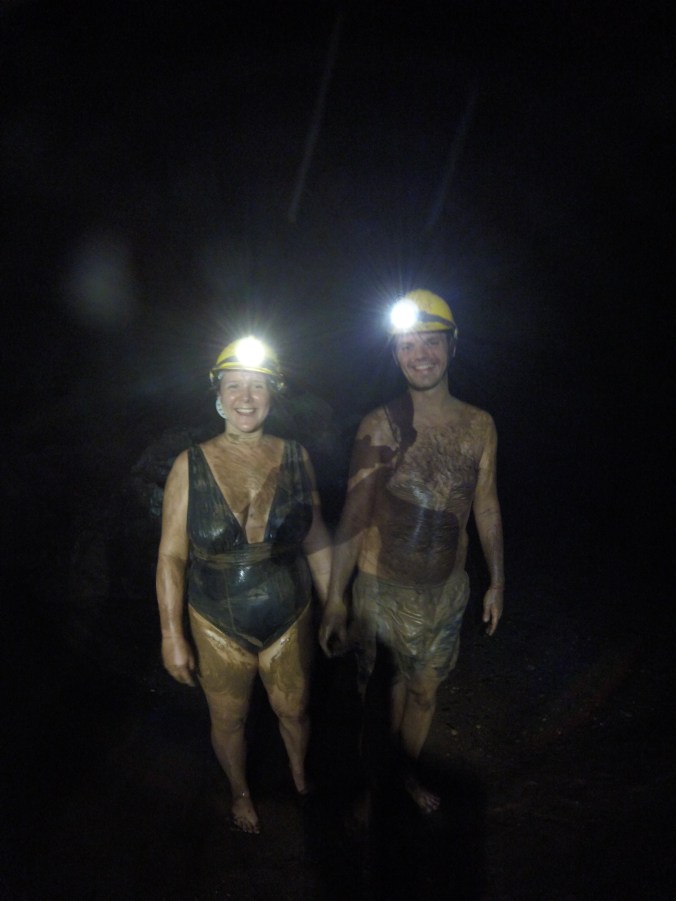

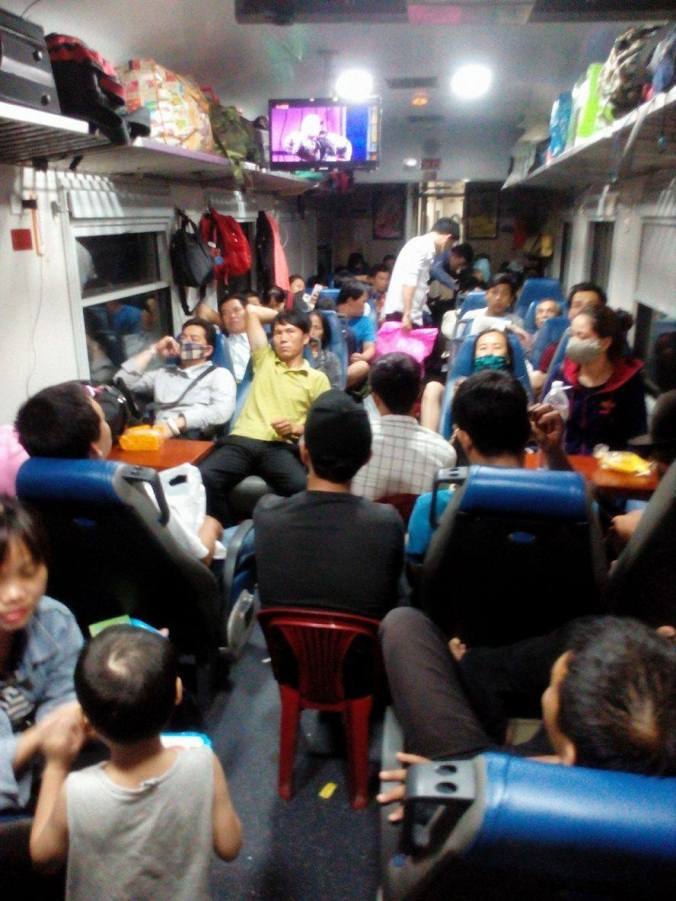

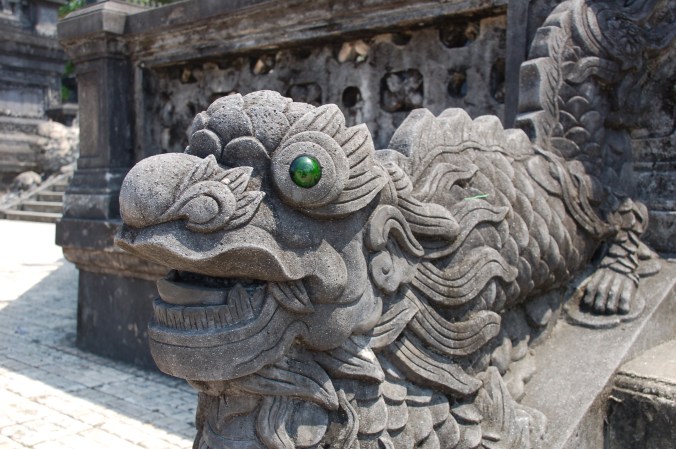



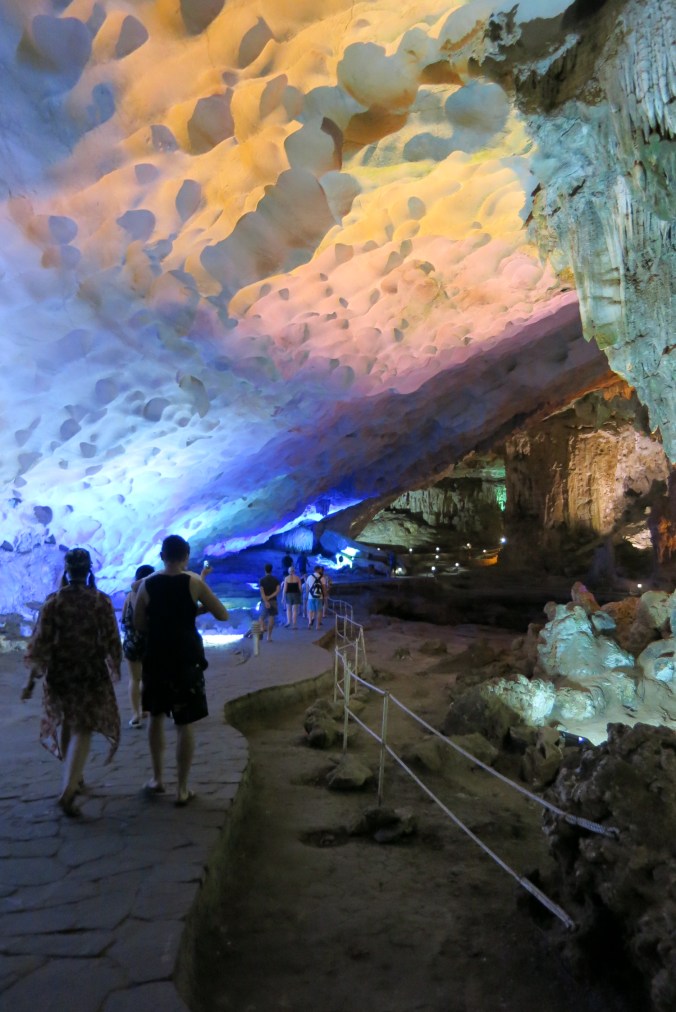
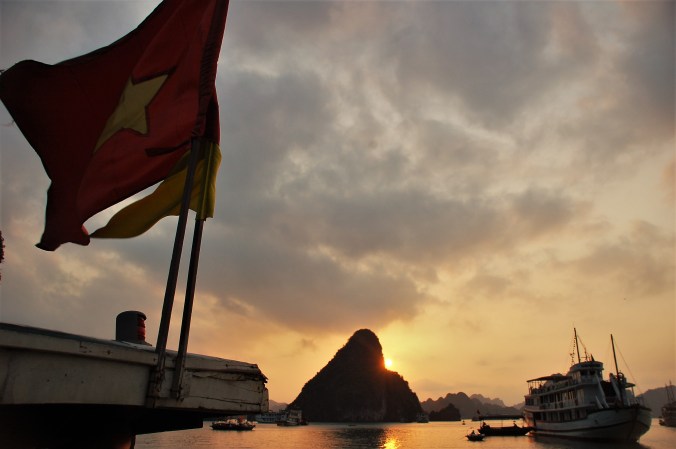
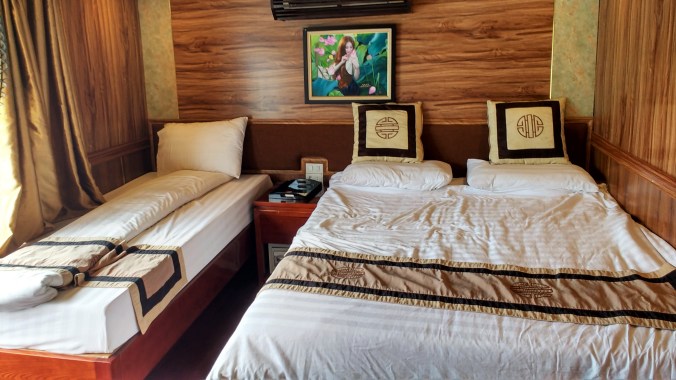




 Next is caving, tombs and royal cities.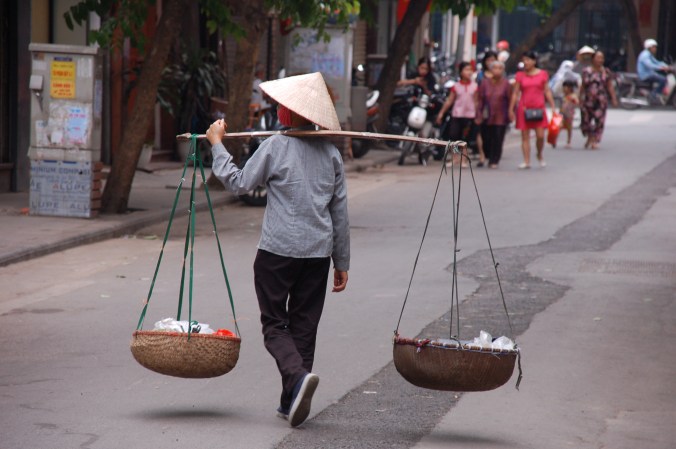




 .
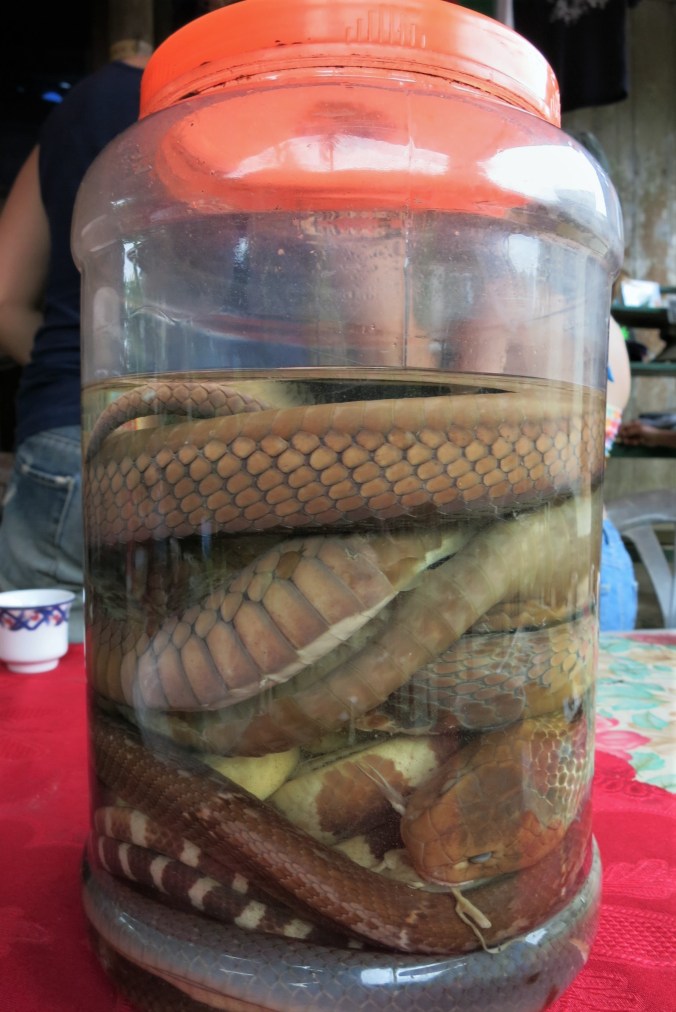
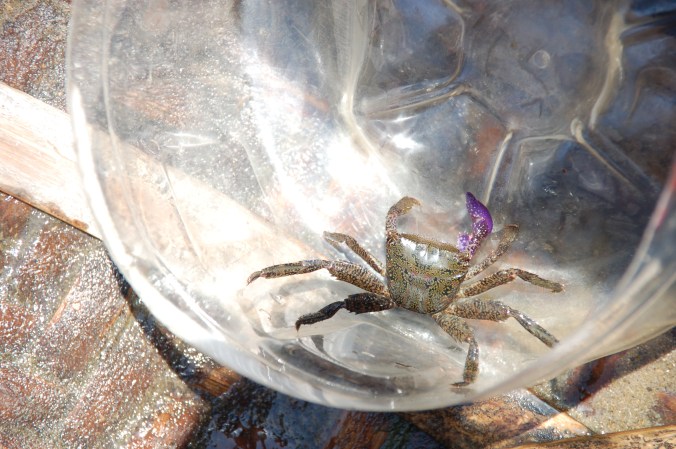
.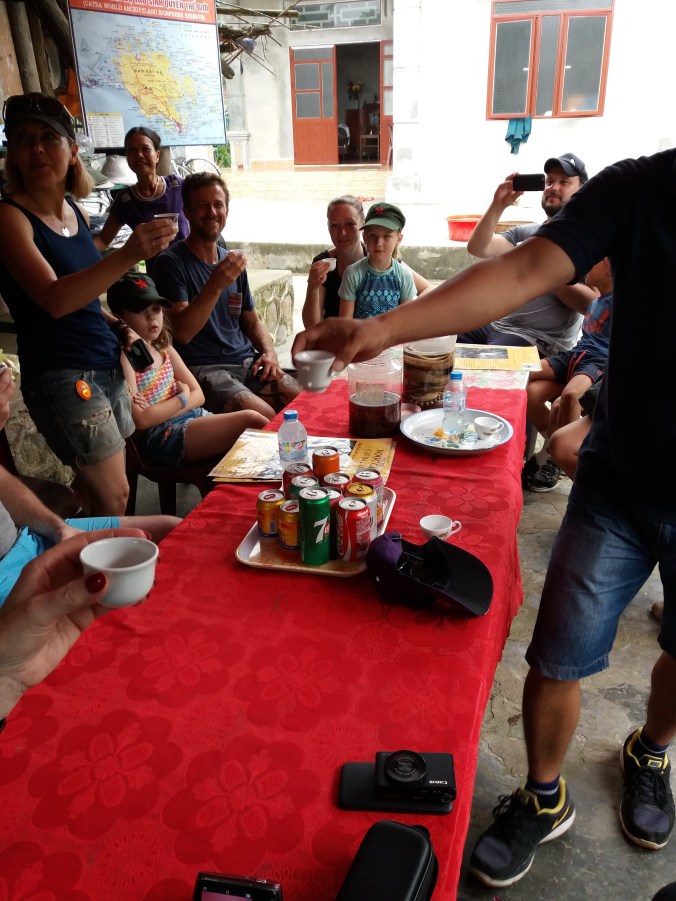 There were three varieties on offer, plain (called white), and two infused versions, one with hibiscus flowers and the other with snake (yes really!). Surprisingly, we all preferred the snake one. Our hostess showed us the most basic still you will ever see, and we met their ‘pets’, horseshoe crabs.


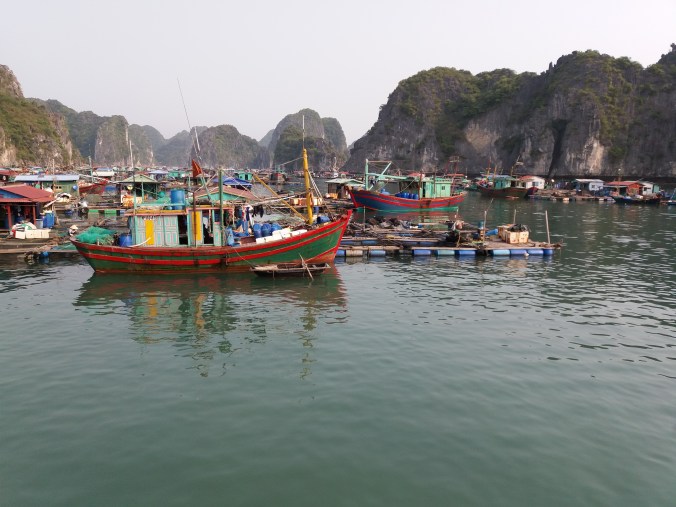
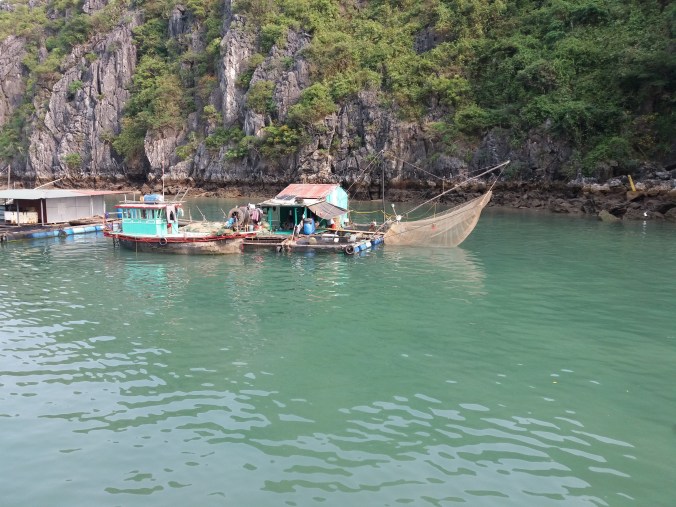
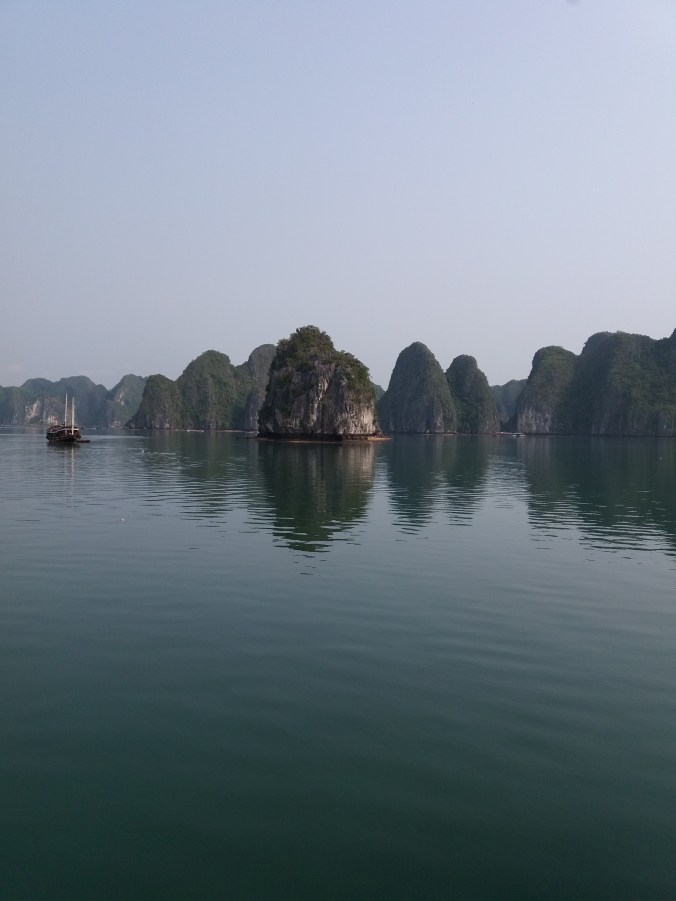
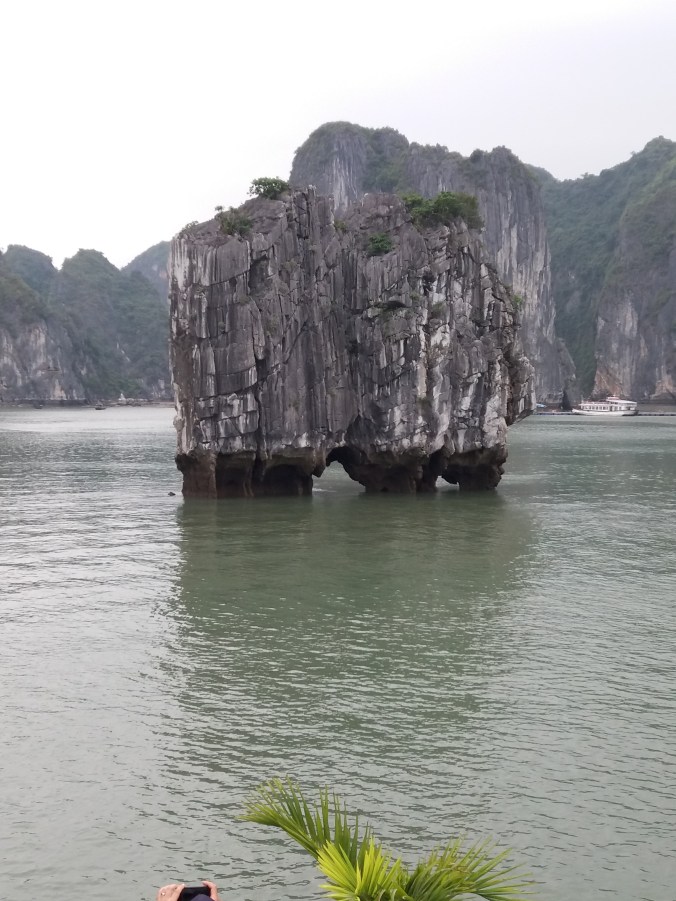
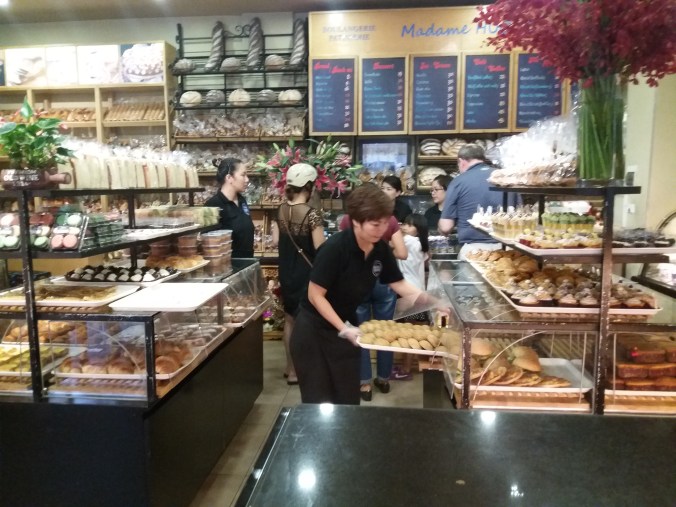
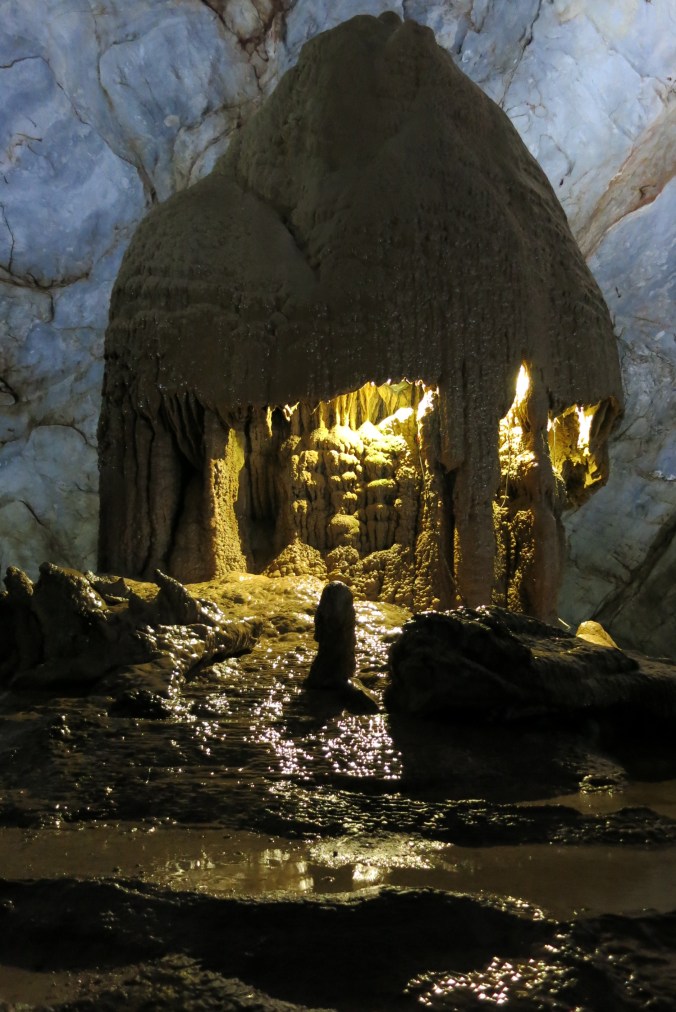
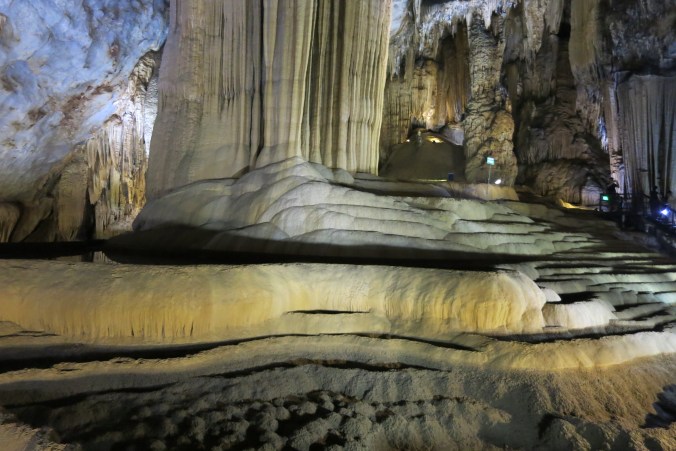
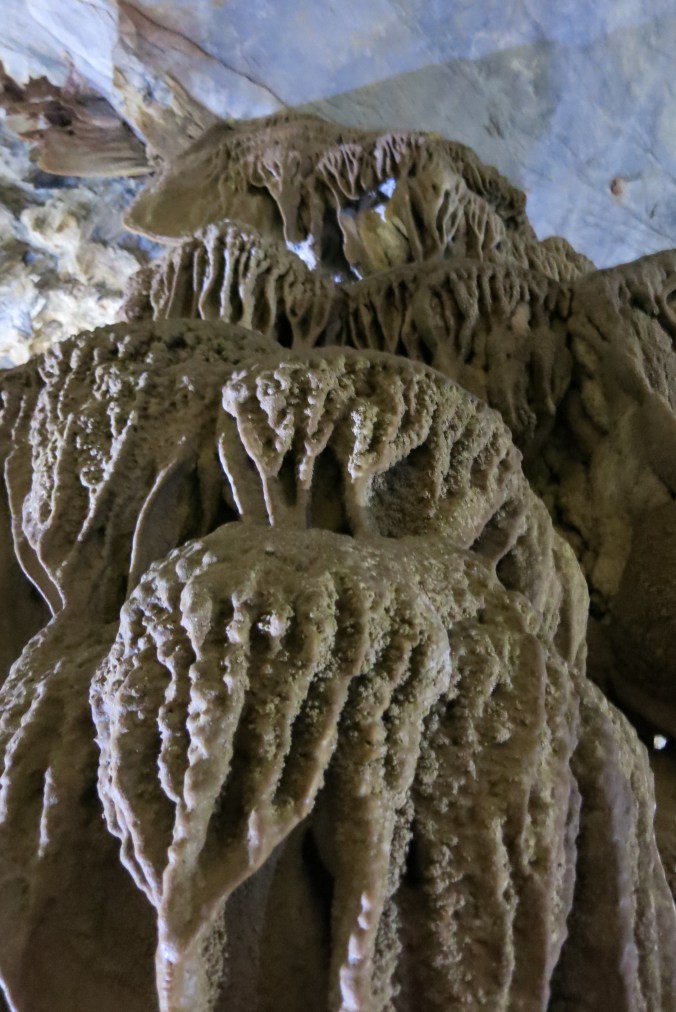
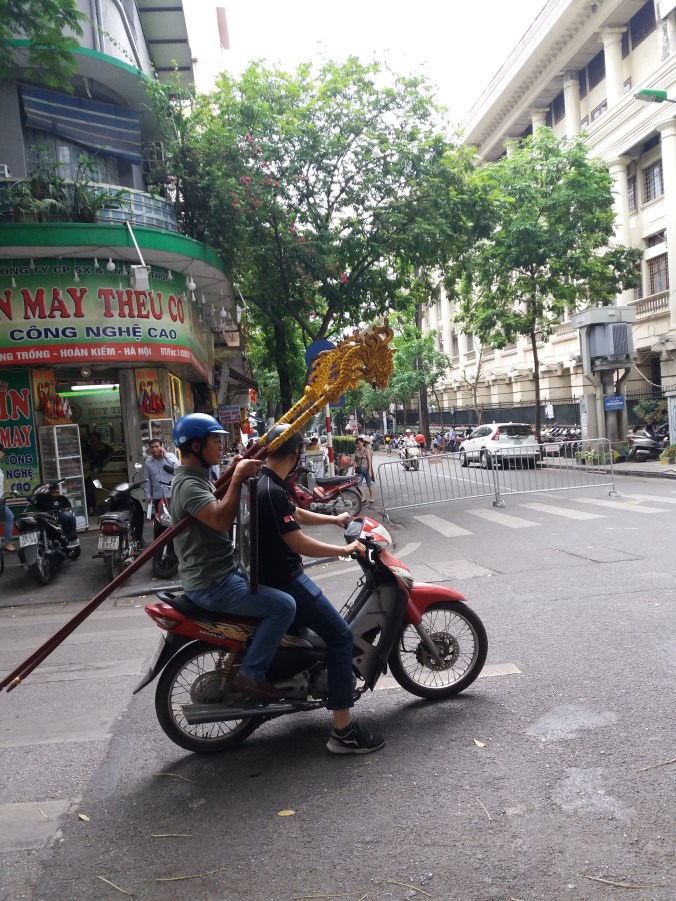 James and Chloe meanwhile were doing some rugged caving, and we’ll leave them to describe the thrills, mud and privations.
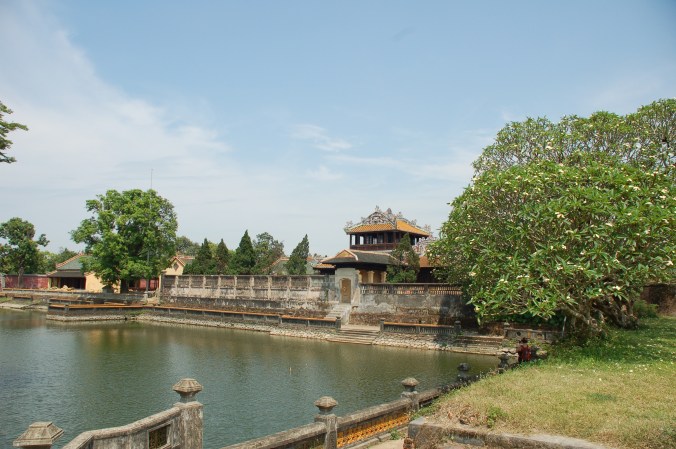
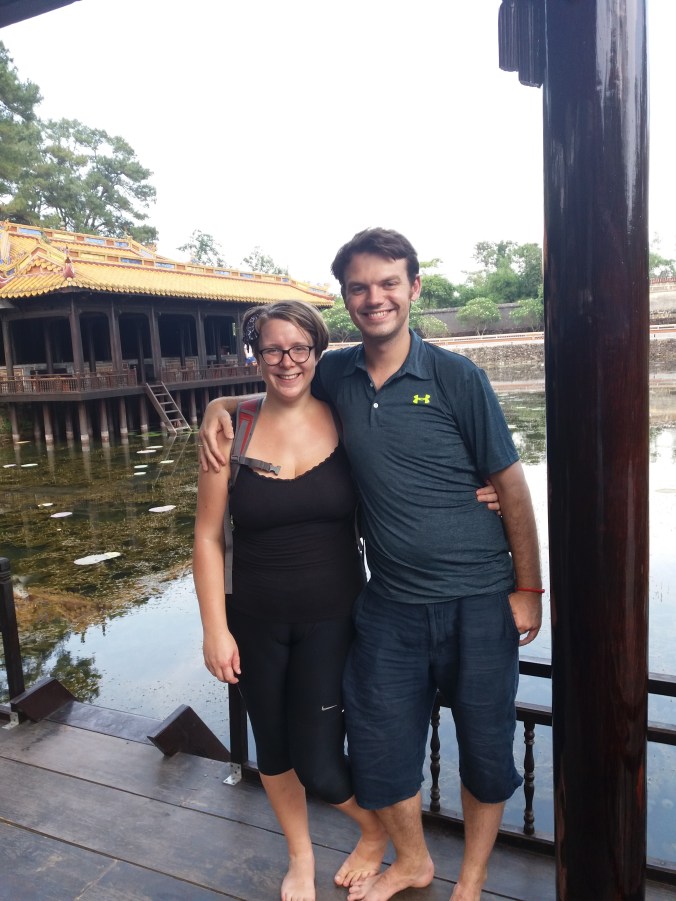 The citadel was about creating a delightful, restful place for the emperor, but also was intended to prevent his own people from entering to threaten or disturb him. The avenues of trees were lovely, and we listened attentively to our guide.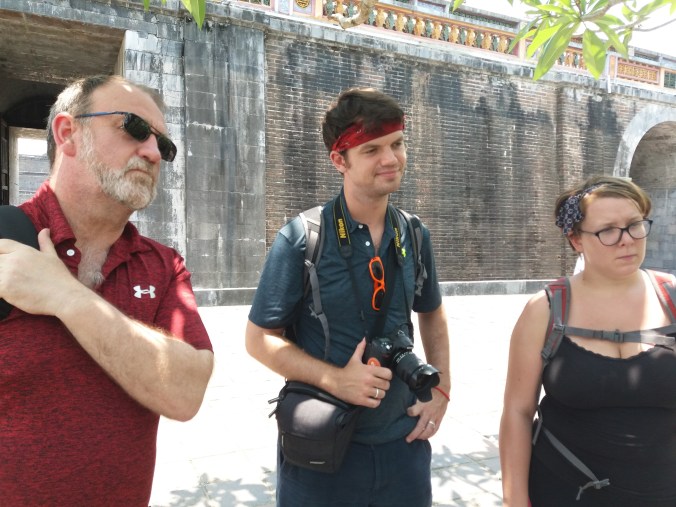






 Backpack Duo